The occasional, often ill-considered thoughts of a Roman Catholic permanent deacon who is ever grateful to God for his existence. Despite the strangeness we encounter in this life, all the suffering we witness and endure, being is good, so good I am sometimes unable to contain my joy. Deo gratias!


Although I am an ordained deacon of the Catholic Church, the opinions expressed in this blog are my personal opinions. In offering these personal opinions I am not acting as a representative of the Church or any Church organization.

Showing posts with label History. Show all posts

Sunday, May 19, 2024

Homily: Pentecost Vigil

Readings: Joel 3:1-5; Ps 104; Rom 8:22-27; John 7:37-39

____________________________

Back at the turn of the millennium I happened to catch a TV news show in which the host asked an historian to name the most important people in human history. I can't recall the historian’s name, but he made a point of calling himself an agnostic. And then he said something rather remarkable.

"As an historian," he said, "I’d have to say that the most influential person in human history was Jesus Christ. The problem is, I can't understand how he came to be so influential. He was really a nobody, tucked away in a little corner of the world. He didn't write anything. He didn't go anywhere or do anything very important. He was executed for treason. And his followers? Just a handful of simple peasants. He should have been forgotten in a matter of days or weeks. It's truly inexplicable. But that's history."

Yes, Mr. Historian, that is history. And this history, viewed from the perspective of the Church's teachings, becomes very explainable.

In truth the 3 most influential events in human history centered on the person of Jesus Christ, and all 3 took place within eight weeks of each other. Something else they have in common: they were actions, taken not by men, but by God Himself.

These events are true history — perhaps we should say, His Story — the story of the Creator of all things doing the most remarkable things — in a truly remarkable way. It’s the story of a loving Father sending His Son to suffer and die at the hands of those He created, as a perfect offering for their sins. For so many today Jesus Christ is inexplicable, until we plumb the depths of God's Love for us.

Because His Story doesn't end with the first event on the Cross at Calvary. If it had, our historian's instincts would have been correct, and Jesus would have been a mere footnote…if that. But the Father wasn’t content to let it end there. He wanted us to know, to accept the truth. And so, three days later, the second event occurred. Jesus rose from the dead, to prove His Divinity, and to give us a foretaste of what awaits those who love Him and keep His commandments.

But even the Resurrection, this momentous event, is insufficient. For the Father wants His Truth, and the knowledge of His infinite Love, to spread to the ends of the earth. He'd sacrificed His Son, not for a handful of followers, not for the Jewish people, His Chosen Ones, who for centuries prepared the way for Jesus, the Christ. No, this act of redemption was for all of humanity, for every person is a child of God.

Today we celebrate this third event, a relatively brief event in the history of salvation, but an event of such impact, it permanently and profoundly altered the very history of the world. For what took place in Jerusalem on that Sunday morning almost 2,000 years ago is God's lasting gift to His children.

He had sent His Son to suffer and die as a redemptive sacrifice, to free us from the slavery of sin and death and to give us the hope of eternal life. And now God fulfills the Word He gave us through His Prophet Joel, and so many others:

“It shall come to pass. I will pour out my spirit upon all flesh. Your sons and daughters will prophesy, your old men will dream dreams, your young men will see visions… I will pour out my spirit.”

Yes, it came to pass, and those days arrived. He sent His Holy Spirit, the Lord and Giver of life, the personification of the Divine Love between Father and Son. And what power the Spirit has!

Suddenly, 120 men and women, this fearful little band of followers, are instantly transformed. The disciples had seen what happened to Jesus, and feared it might well happen to them. As they gathered in that upper room, in secrecy and prayer with our Blessed Mother, the mighty breath of God and the fire of the Spirit’s presence engulfed them and changed them forever.


The Holy Spirit manifested in them the new, eternal covenant Jesus instituted at the Last Supper, forming them into the Church to bring God's message of salvation to the world. 
The Jewish feast of Pentecost took on entirely new meaning. What had Jesus just commanded them?

"Go, therefore, and make disciples of all nations, baptizing them in the name of the Father, and of the Son, and of the Holy Spirit, teaching them to observe all that I have commanded you; and lo, I am with you always until the close of the age."

Now, for the first time, they began to understand what this mission entailed. And just as suddenly, all of Jesus' teachings, His promises, the words of the Word of God that had seemed so cryptic, became perfectly clear. Inspired by the Spirit with this new understanding, overflowing with enthusiasm for the mission He’d given them, they poured into the crowded streets of Jerusalem to share the Good News.

But the Holy Spirit had only just begun, and from those 120 disciples, He calls one to lead the way. It’s Peter, the fisherman – full of bluster and human weakness, who’d betrayed his Lord in those final hours…It’s Peter. Peter, the Rock upon whom Jesus promised to build His Church, speaks to the crowd and on that first Pentecost Sunday, the Church is born.


Miracle follows miracle and three thousand are baptized, for the work of the Spirit can’t be stopped. 
The one, holy, catholic, and apostolic Church, brought into being that day, is still with us today, still guided by the Holy Spirit, still led by Christ's Vicar, still committed to the Apostolic mission of bringing the Good News of Jesus Christ to the world. And the mission is universal, given to each of us, for we are the Church.

Why this mission? Just look around you. How can you miss it? …the sadness and hopelessness and sinfulness that plague so many today. These are God's children! They don’t need our condemnation or pity; they need God’s love and evangelization. The Father wants to bring them to Himself, and He calls us to take part in His work.

Does this call, this mission, frighten you? Are you terrified of the idea of evangelizing others? You shouldn’t be, because just like Peter and the disciples on that first Pentecost, you won’t be alone. You see, we can’t do God’s work without the Spirit. As St. Paul reminded us “…the Spirit too comes to the aid of our weakness.” And later Paul told the Corinthians:

"There are different kinds of spiritual gifts, but the same Spirit…different forms of service, but the same Lord...To each individual the manifestation of the Spirit is given for some benefit."

Do you see what He’s telling us? We have the same mission, even though we carry it out in different ways, and it’s the Holy Spirit who inspires and guides each of us. Today we’re reminded to be roused from the comfort and safety of our own upper rooms. We too need to be amazed — that our faith should be accompanied by the sounds, the heat, the cacophony of different voices, the presence of the Holy Spirit, proclaiming the mighty acts of God.

Sisters and brothers, we all have a mission to a world that waits beyond our parish walls…

…a world often confused, divided, afraid.

…a world waiting to be astounded by power of the Spirit and His message of hope.

God doesn’t encourage us; He commands us, for it’s the essential work of our Christian faith.

Of course, it’s comforting to stay within our families or parish community, but God doesn't want us to get too comfortable. For on that first Pentecost God turned the disciples’ little circle inside out. Suddenly they faced not each other, but a world waiting to hear the Good News. As we follow them, we can rely on God’s promise: the Holy Spirit is with us, guiding us, his wisdom flowing through us…We need only invite Him.

How did Jesus put it in today’s Gospel?

Rivers of living water will flow from within him who believes in me.”

Let’s welcome the Spirit into our lives…and those rivers will flow through us as He renews the face of the earth.

And today, here on the vigil of Pentecost, what a perfect time to pray to the Spirit, the Giver of Life, asking Him to convert and forgive all those who have taken so many innocent lives, lives He has given to the world.

Do it today, and witness the wonders, the mighty acts of God, He will bring about in your lives, in my life, and in the lives of all we encounter.

Monday, January 18, 2021

Bible Study Reflection #25: Welcome the Holy Spirit

I've been a bit slow posting these COVID-driven Bible Study Reflections, so I'll post the two most recent today. I hope they strike a needed chord with at least a few of my regular readers. Stay healthy, folks; but even more important, stay faithful and trust in our loving, merciful God.

_________________

Many years ago, I read an article in which the writer ranked historical events and people, identifying those he believed were most influential. Einstein or Edison? Henry Ford or Henry Aaron? Hitler, Stalin, Roosevelt, or Churchill? Moses, Buddha, Jesus, or Mohammed? Or which events were more important? World War II or the Napoleonic Wars? The invention of the digital computer or the invention of indoor plumbing?

An interesting article, although the writer’s biases were fairly evident. But I suppose, like most of us, he too carries his biases to work. Ironically, perhaps the most biased among us are the secular pundits who claim to have rid themselves of religious bias and therefore belittle the importance of religion in the lives of others. Because they lack religious faith, they dismiss it as an important motivation. The irony is even greater because religious faith, when viewed objectively, has had more impact on human history — for both good and bad — than any other factor.

I recall watching a news show back at the turn of the millennium. The host asked a historian to name the most important people in human history. I don’t remember the historian’s name, but he made a point of calling himself an agnostic. And then he said something surprising, which I've paraphrased here:

As an historian, I’d have to say the most influential person in human history is Jesus Christ. The problem is, I can't understand how he came to be so influential. He was really a nobody, tucked away in a little corner of the world. He didn't write anything. He didn't go anywhere or do anything very important. He was executed for treason. And his followers? Just a handful of simple peasants. He should have been forgotten in a matter of days or weeks. It's truly inexplicable. But that's history.

Yes, Mr. Historian, that is history. And this history, viewed from the perspective of the Church's teachings, becomes very explainable. You see, the three most influential events in the history of humanity all centered on the person of Jesus Christ, and these events all took place within eight weeks of each other. Another thing they have in common: they were actions, taken not by men, but by God Himself. These events are true history — perhaps we should say, His Story — the story of the Creator of all doing the most remarkable things in an almost unbelievable, inexplicable way.

The Incarnation is the story of a loving Father sending His Son to suffer and die at the hands of those He created as a perfect offering for their sins. Our historian was at least partially right: Jesus Christ is inexplicable, until we plumb the depths of God's Love for us. His Story doesn't end on the cross at Calvary, which is the first of those three events. If it had, our historian's instincts would have been correct, and Jesus would have been, at most, a mere footnote.

But the Father wasn’t content to let it end there. He wanted us to know and to accept the truth. And so, three days later, the second event occurred. Jesus rose from the dead to prove His Divinity and to give a foretaste of what awaits those who love Him and keep His commandments.

But even the Resurrection, this momentous event, was insufficient. For the Father wants His Truth, and the knowledge of His infinite Love, to spread to the ends of the earth. His Son’s sacrificial death wasn’t just for a handful of followers, and not just for the Jewish people, His Chosen Ones, who for centuries preserved His Law. No, this act of redemption was for all of humanity, for every person is a child of God.

We, therefore, celebrate this third event, a relatively brief event in the history of salvation, but an event of such impact that it altered the very history of the world, permanently and profoundly. For what took place in Jerusalem on a Sunday morning almost 2,000 years ago is God's lasting gift to His children.

In his Gospel, St. John offers a glimpse of the effects of this special day:

On the last and greatest day of the feast, Jesus stood up and exclaimed, “Let anyone who thirsts come to me and drink. As Scripture says: Rivers of living water will flow from within him who believes in me.” He said this in reference to the Spirit that those who came to believe in him were to receive. There was, of course, no Spirit yet, because Jesus had not yet been glorified [Jn 7:37-39].

The Father had sent His Son to suffer and die as a redemptive sacrifice, to free us from the slavery of sin and death and to give us the hope of eternal life. Now He sends His Holy Spirit, the giver of life, the personification of the Divine Love between Father and Son. And what power the Spirit has! Suddenly, 120 men and women, this fearful little band of followers, are transformed.

If someone’s never been afraid – really afraid, afraid he might suffer a violent death at any moment -- the fear that those who’ve survived combat know all too well -- then he probably doesn’t know how the disciples felt that day. They’d witnessed what had happened to Jesus, and they feared it might well happen to them. But as they gathered in prayer around our Blessed Mother in the upper room, the mighty breath of God and the fire of the Spirit’s presence engulfed them, changing them forever.

The Holy Spirit manifested within them the new, eternal covenant with God, the covenant Jesus instituted at the Last Supper. In doing so the Spirit formed them into the Church through which they would bring God's message of salvation to the world. How had Jesus put it just ten days earlier?

"Go, therefore, and make disciples of all nations, baptizing them in the name of the Father, and of the Son, and of the Holy Spirit, teaching them to observe all that I have commanded you; and lo, I am with you always until the close of the age" [Mt 28:19-20].

Now, for the first time, they began to understand what this mission entailed. And just as suddenly, all of Jesus' teachings, all of His promises, the words of the Word of God that had seemed so cryptic, became perfectly clear. Inspired by the Spirit with this new understanding and overflowing with enthusiasm for the mission He’d given them, they poured into the crowded streets of Jerusalem to share the Good News.

But the Holy Spirit had only just begun, and from those 120 disciples, He called one in particular to lead the way, one already chosen by Jesus. For in the second chapter of Acts, it’s Peter, the fisherman – full of bluster and human weakness, the man who’d betrayed his Lord in those final hours -- who now leads the way. Peter, then, the Rock upon whom Jesus promised to build His Church, is confirmed by the Spirit as the first Vicar of Christ on earth.

And I tell you, you are Peter, and on this rock I will build my church, and the gates of the netherworld shall not prevail against it [Mt 16:18].

On that first Pentecost Sunday, the Church is born.

What happened that first day? Turn to the Acts of the Apostles and once again read chapters two through five and relive the wondrous events of those first exhilarating days of the Church founded by Jesus Christ. Listen again to the words of a now-inspired Peter who called all who heard him to repentance, Baptism, and salvation through faith in Jesus Christ. Miracle followed miracle, and as St. Luke tells us:

Those who accepted his message were baptized, and about three thousand persons were added that day...And every day the Lord added to their number those who were being saved [Acts 2,41,47].

Yes, indeed, the work of the Spirit can’t be stopped. Peter, the street-preacher, tells his impromptu audience of Jews, a gathering from every corner of the Roman Empire and beyond, that Jesus is the fulfillment of the Law and the Prophets. He recalls the words of the prophets Isaiah and Joel [See Is:2:2,44:3 and Jl 3:1-5]:

It will come to pass in the last days that I will pour out a portion of my spirit upon all flesh. Your sons and your daughters shall prophesy, your young men shall see visions, your old men shall dream dreams [Acts 2:17].

Peter was preaching to a congregation of Jews, pilgrims who had come to Jerusalem from a dozen different lands to celebrate the Jewish feast of Pentecost. And as Pope Benedict XVI, in his wonderful, little book, Called to Communion, explains, on that first day, the truly Catholic Church was born:

“What first exists in one Church, the Church that speaks in all tongues – the ecclesia universalis [the catholic church]; she then generates Church in the most diverse locales, which nevertheless are all embodiments of the one and only Church” [Called to Communion, p 44].

We must never forget, as so many have, that the One, Holy, Catholic, and Apostolic Church, brought into being that day so long ago, remains with us today, still guided by the Holy Spirit, still led by Christ's Vicar, still committed to the Apostolic mission of bringing the Good News of Jesus Christ to the world. Just ten days earlier, Jesus had given His “Great Commission” to his nascent Church:

All authority in heaven and on earth has been given to me. Go therefore and make disciples of all nations, baptizing them in the name of the Father and of the Son and of the Holy Spirit, teaching them to observe all that I have commanded you; and lo, I am with you always, to the close of the age [Mt 28:19-20].

But this mission isn’t something reserved solely to the successors of the Apostles, to the Holy Father and the bishops. No, this mission, this command of Jesus, is universal and intended for each one of us. This is our challenge as Catholic Christians. Jesus didn’t place limitations on His commissioning of the Church. We are all called to carry out the Church’s primary mission, that of evangelization.

Why this mission? Just look around you. It’s in all our lives: the sadness and hopelessness and sinfulness that plague so many today. These are God's children. They don’t need our condemnation or pity; they need evangelization, for the Father wants to bring them to Himself, and He calls each of us to take part in His work.

Does this call, this mission, frighten you? Do you resist because, deep down you are terrified of the idea of evangelizing others? You shouldn’t be. Just like Peter and the disciples on that first Pentecost, you won’t be alone. You see, we can’t do God’s work without the Spirit. St. Paul put it beautifully

In the same way, the Spirit too comes to the aid of our weakness; for we do not know how to pray as we ought, but the Spirit itself intercedes with inexpressible groanings [Rom 8:26].

And as Paul reminded the Corinthians sometime later

There are different kinds of spiritual gifts but the same Spirit; there are different forms of service but the same Lord; there are different workings but the same God who produces all of them in everyone. To each individual the manifestation of the Spirit is given for some benefit [1 Cor 12:4-7].

Do you see what Paul is telling us? We have the same mission, even though we carry it out in different ways. And it’s the Holy Spirit who inspires and guides each of us.

This first Pentecost reminds us that we need to be roused from the comfort and safety and solitude of our own upper rooms. It reminds us that we need to be amazed — that our faith should be accompanied by the sound of wind, the heat of flames, the cacophony of different voices, and the presence of the Holy Spirit, proclaiming the mighty acts of God.

Peter and the Holy Spirit remind us that we all have a mission in and to the world, a world that waits just beyond our parish walls:

a world plagued by sinfulness;

a world often confused, divided, and afraid;

a world calling us to look outward as well as inward;

a world waiting to be astounded by the mighty acts of God and by a message of hope, the Good News of Jesus Christ, a message He proclaims through us, just as He did through the Apostles.

Brothers and sisters, this mission isn’t an option, something we’re simply encouraged to do. It’s a command from God Himself, an essential element of our lives as Catholic Christians.

Now, there’s nothing wrong with finding comfort in the midst of our family or parish community. Just don’t get too comfortable, for on Pentecost God took the disciples by the hand and turned their little circle inside out. Suddenly they faced not each other, but a world waiting to hear the Good News.

Yes, this can be a frightening thing. But remember, when we carry God’s love and truth to others, we will never be alone. For that’s God’s promise: the Holy Spirit will be with us, guiding us, his wisdom flowing through us. We need only invite Him into our lives.

How did Jesus put it in today’s Gospel?

“Rivers of living water will flow from within him who believes in me” [Jn 7:38 – See also Is:12:3; Ez 47:1].

Welcome the Spirit into your life, and through you He will renew the face of the earth. Do it today and see the wonders He will bring about.

Wednesday, August 19, 2020

Kerry at the Convention

Good heavens! I thought John Kerry had taken his wife’s dowry and completely retired to his little mansion on Nantucket where he could contemplate his lifetime of public failures. But no, just as he did back in his Vietnam days, he resurfaced and made headlines. Of course, as a young officer on swift boats in the Mekong delta, all John Kerry did was convince his peers that his primary mission was to shop for medals. These were the same medals he publicly tossed away at that antiwar rally while he cozied up to Ho Chi Minh’s favorite actress, Jane Fonda, and told nasty lies about his comrades in arms. But then, just when you thought he was permanently out of sight, John appeared at the virtual Democrat convention to speak fondly of himself, of Barack Obama...Oh, yes, and of Joe Biden. 
A Protesting John Kerry

As he has throughout his political career, Kerry told several whoppers last night. The biggest? He reminded the nation how he and Obama, and presumably with the blessing and moral support of Joe Biden, "eliminated the threat of an Iran with a nuclear weapon." This was, of course, a lie and Kerry knows it. If he doesn't, he's a bigger fool than most of us think. The agreement with Iran -- a, non-binding, unconstitutional agreement since it did not receive Senate ratification as a treaty -- asked Iran only to delay its development of nuclear weapons. It certainly did not "eliminate the threat." In return for this meaningless delay, Obama-Kerry removed all sanctions and gave the murderous Iranian regime a huge pile of untraceable cash subsequently used to finance terrorist activity throughout the Middle East and elsewhere. The result of the agreement? Iran continued to develop nuclear weapons and delivery systems while supporting worldwide Islamist terrorism, and did all these wondrous things thanks to funds provided by U.S. taxpayers. Aren't we proud?

This appeasement of Iran brought to mind a comment by Winston Churchill, the statesman most despised by President Obama:

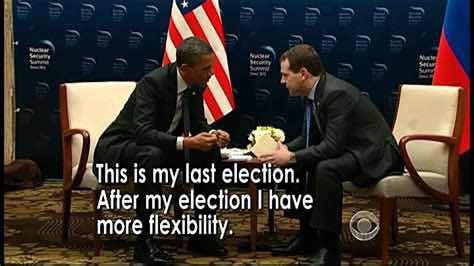
Another lie involved his claim that the Obama administration put together that multi-nation coalition to destroy ISIS. Yes, there was a coalition but it had little effect on ISIS, and certainly didn’t “destroy” it. In fact, by pulling out of Iraq, the Obama administration turned the “J-V Team” into the Varsity that went on to control large parts of the Middle East and extend its terrorist activities. It took the aggressive anti-ISIS policies of the Trump administration to destroy ISIS. And how about Libya, Mr. Secretary of State? Oh, yeah. I guess that debacle occurred under your predecessor, the equally incompetent Hilary Clinton. All that “leading from behind” can be a real challenge if the folks in front decide to go in a different direction. Like Russia invading the Ukraine and taking over Crimea while the US watched and did nothing to help. How did Obama put it to Russian President, Dimitri Medvedev, back in March of 2012? “This is my last election. After my election I have more flexibility.” And two years later, after that election, Russia invaded.


There’s also Kerry’s ludicrous claim that the Obama administration stopped Ebola before it became a pandemic. Talk about apples and oranges. Unlike COVID-19, that was airmailed to us and the rest of the world thanks to the policies of the Chinese Communist Party, Ebola was pretty much confined to parts of West Africa. I believe there were less than a dozen U.S. cases. 

Rewriting history is always a dangerous game, especially when those who lived it are still alive and can refute revisionist claims. 

Saturday, November 16, 2019

So You Wanna Be A Socialist?

A few years ago, while speaking with a young person who was entering her senior year at a large state university, I suggested that the average high-school graduate from say, 1920 to 1960, was far better educated than the average college graduate today. She responded by saying that, in effect, I was insane: "That's crazy! You really can't believe that..." And so I asked this person a few seemingly simple questions, the kind that a high-school graduate should be able to answer. I began with a series of questions on US history, very basic questions, nothing complex:
  • In what year was the Declaration of Independence written? Who was its primary author? From what nation did its signers seek independence? Who was the leader of that nation? What war resulted?
  • Who were the first three presidents of the United States?
  • The War of 1812 was between the United States and what other nation? 
  • During what years did our nation engage in the Civil War? Who was president during those years? Name two leading generals, one from each side?
  • In what war did the United States engage in 1898? 
  • When did the first World War take place? Name at least two nations on each side. Did the United States take part? Who was our president during this war?
  • Name two nations that were among the enemies of the United States during World War Two. What event led to our active involvement in this conflict? 
By this time it became apparent that our soon-to-be college graduate -- a psychology major -- was at an embarrassing loss because her only correct answer was the naming of Abraham Lincoln as president during the Civil War. Interestingly, she could not tell me when the Civil War took place. Her guess? "Around 1900." I won't continue the embarrassment by repeating some of her other answers. I suspect she knew even less about world history.

As her historical ignorance became apparent she objected that my questions all demanded knowledge of meaningless facts, "You know, dates, names, stuff like that...Not really important things like concepts or ideas."

I responded by saying that she was right about the importance of ideas and concepts. But I also suggested that to understand those concepts and ideas we must be able to place them in their proper context, the context of time and place, and to connect them to the people who originated and embraced them. After all, that's what history is. If we are unable to do this, to understand the sources and the results of ideas, how can we evaluate their efficacy? Quite simply, if we don't understand history we will quite likely continue to repeat the mistakes of the past. Of course, George Santayana, a man as complex as the times in which he lived, stated this famously when he wrote: 

"Those who cannot remember the past are condemned to repeat it." 

This encounter, admittedly with a single representative of her generation and, I suppose, anecdotal in the extreme, came to mind when I read that 7 in 10 millennials would vote for a socialist. To anyone who understands the nature of socialism, this might seem unbelievable. But not to me. I can think of only two reasons to be a socialist: a desire for power or invincible ignorance.

For the ideologue, socialism becomes a means to achieve power over others, over many others. And to ignorant snowflakes, who rely more on emotion than intellect, socialism sure sounds good, especially if its history can be ignored. That is, of course, the problem. When we examine the history of socialism we find it inevitably leads to massive corruption, slavery, and death. Socialism always rejects freedom.

During the past 100 years our world has come face to face with socialism in its two forms: the national socialism of Hitler's Germany and the international socialism of communism as manifested by Lenin, Stalin, Mao, Castro, and a host of others. Although often considered opposites, at the extremes of right and left, there's really little difference between the two.

Jesus actually warned us of these evils and provided a key to recognizing them when, in His "Sermon on the Mount," he said:
"Beware of false prophets, who come to you in sheep's clothing, but underneath are ravenous wolves. By their fruits you will know them" [Mt 7:15-16].


And the fruits of Nazis and communists are remarkably similar: the murder of tens of millions of innocents and the enslavement of hundreds of millions more. Socialism in all its forms places the good of the state -- perhaps, more accurately, the good of those who wield the power of the state -- above all else. Those pesky values we hold dear -- freedom, truth, faith, justice, family, civilization, etc. -- become expendable, sacrificial victims offered to the false gods of socialism.

Socialism is hostile to life and faith. It simply cannot accept Almighty God, the Word, as the supreme good and will always make individual life subservient to the state. Just consider the leftists running for president today. All appear to be farther to the left than President Obama, and none are pro-life.

Our God clearly places the decision before us:
"See, I have set before you life and good, death and evil...Choose life, then, that you and your descendants may live, by loving the Lord, your God, obeying His voice, and holding fast to Him" [Dt 30:15,19-20].

How to educate a millennial, and whatever a member of the next generation is called? I haven't a clue. They certainly won't receive a proper education at a public high school or by attending one of our colleges or universities. Most of these institutions abandoned education decades ago in favor of indoctrination and job or professional training. I'd suggest  encouraging your favorite millennial to read books such as Anthony Esolen's The Politically Incorrect Guide to Western Civilization, but in these days of 140-character tweets, reading a book might be asking too much.

Maybe we're simply doomed as a civilization, and some future generation will have to pick up the pieces and begin anew, assuming our merciful God, the Lord of History, doesn't end it all before then.

We certainly live in interesting times. All we can do is preach the Word, follow and live the Way, pray for civilizational healing, and keep the Faith.

Sunday, July 30, 2017

The History Channel...Believe it or not!

"There's no history on the History Channel" has been one of my mantras for years. There's really little need to prove the truth of the statement. If one suffers through a few hours of the channel's programming, the distortions and weirdness of its "history" are apparent.

But a few weeks ago the network outdid itself. On July 3, the anniversary of the end of the Civil War's Battle of Gettysburg in 1863, the History Channel tweeted a brief story celebrating the battle, but included a picture of George Washington taking command of the Continental Army in 1775 at the start of the Revolutionary War (see below). I guess the historians at the History Channel just got a bit confused. Hey, if you've seen one war, you've seen 'em all.

Okay, I'll admit this error was likely made by some poorly educated summer intern, but just glance at the network's line-up of shows. Do you see much actual history there? Today, for example, once one eliminates several hours of "Top Gear," even more hours of "American Pickers," we're left with "Holy Grail in America" and "Quest for the Lost Ark." Now that's some serious history.


Monday, January 31, 2011

History and Revelation

I'm neither a historian nor a theologian so any comments I make on history and revelation are just that, my comments, my own unenlightened thoughts on a subject that was thrust on me the other day during a conversation with a parishioner. 

He and I were chatting casually about the state of the world when he said, "I'm sure glad that God is on our side." Assuming he was referring to the Church, I asked, "And what side is that?" His reply? "Why the United States of course." 

Now that's hardly what I would call a "catholic" comment, but I let it slide until he repeated it a moment later in slightly different terms. At that point I could no longer restrain myself, and asked him first, why he believed God was on our side, and second, in what conflict had God chosen us as His allies.

His answers were a bit confusing, at least to me, but I think I can boil them down to the following: God likes us best because we're a democracy, and the conflict involved is the ongoing battle of good versus evil. I won't bother relating the rest of our brief conversation because despite my best efforts I really don't think I had any appreciable effect on his beliefs. Indeed, he probably went away thinking I was, at best, some kind of anarchist.

But our brief conversation got me thinking about a few things, specifically history and revelation. And whenever I find myself thinking about those two subjects I usually turn to St. Augustine.

St. Augustine
It's pretty easy for us, especially for us naturally patriotic Americans, to see our time and our nation as something special, something set apart from the rest of the world. We've been, in effect, conditioned to do so by a culture that, at least until recently, set our nation apart and placed it above the rest of humanity, as John Winthrop envisioned it: a "city upon a hill." Ronald Reagan, perhaps our most optimistic president, and certainly a patriot, echoed Winthrop's vision when he gave his "Shining City on a Hill" speech and declared the United States "the last best hope of man on earth."

Now, I really like Ronald Reagan and wish we'd had more presidents like him, but I can't agree that the United States is man's "last best hope." I won't deny that the way of governing conceived and put into place by our founding fathers is doubtless the best ever experienced by humanity...at least from a human perspective. It has brought about more freedom and more wealth for a greater number of people than any other system of government. It isn't perfect, far from it, but that's to be expected. It was, after all developed by men, not by God.

And that's the problem. Our nation is part and parcel of Augustine's City of Man, and therefore will always be in conflict with the City of God. Our nation is an earthly city, one ultimately ruled by self-love and contempt for God and His Law. One need look no further than the decisions of the highest arbiter of our law, the Supreme Court, to recognize the truth of this. Our courts, our legislators, and our executives choose, as they always have, man's law over God's Law, man's will over God's Will. The United States may well be the best that man has to offer the world, but it's still man doing the offering.

No, the last best hope of man is not the City of Man but the Church, the presence of the City of God on earth. It cannot live in total peace with the City of Man because it is ruled by something very different. In the words of Augustine, it is ruled by "love of God even to the contempt of self." Despite this, the two cities do, however, live together, interwoven as long as they share the world. As Catholic historian Christopher Dawson wrote, the two cities "have been running their course mingling one with the other through all the changes of times from the beginning of the human race, and shall so move on together until the end of the world, when they are destined to be separated at the last judgment." It will, of course, be a final and complete separation. As for me, at the time of the last judgment -- that is, at the very end of time itself -- I hope I will be judged to be a citizen of the City of God and not the City of Man.

Augustine believed that God is very much involved in our history. The very fact of the Incarnation itself should remove any doubts on the part of the Christian. Augustine saw God's hand in the order and beauty of the cosmos, of all of His creation. But, perhaps more importantly, Augustine saw the possibility of human freedom operating within God's plan of salvation. He sees God entering our world of time to transform it through His self-revelation. And from that revelation, God allows us to take part in the work of that transformation. 

History, then, is much more than just the passing of time measured by the actions of men and women, by the rise and fall of nations and civilizations. History is Revelation. History is God making Himself known in the lives of His people and in His created order right here on earth.

No, God is not on our side; rather, He calls us all to be on His side.