The occasional, often ill-considered thoughts of a Roman Catholic permanent deacon who is ever grateful to God for his existence. Despite the strangeness we encounter in this life, all the suffering we witness and endure, being is good, so good I am sometimes unable to contain my joy. Deo gratias!


Although I am an ordained deacon of the Catholic Church, the opinions expressed in this blog are my personal opinions. In offering these personal opinions I am not acting as a representative of the Church or any Church organization.

Monday, October 25, 2010

Dead Sea Scrolls soon to be online

The Dead Sea Scrolls, that remarkable collection of 2,000-year-old documents found back in the 1940s in those Judean desert caves, have been very tightly controlled by the Israel Museum in Jerusalem. For years only a select group of scholars had direct access to the original manuscripts. In recent years, however, the texts, along with photographs of the original documents have been published in book form -- in 39 large, expensive volumes. This was an improvement, but they were still available to only a limited audience. But this is all going to change.
A fragment of a Dead Sea Scrolls manuscript

Google has teamed up with Israel's Antiquity Authority to make the documents available online to everyone, for free! Not only will you be able to view the original documents, but the you can also access an English translation of all the manuscripts. Interestingly, because of the wonders of advanced digital photography and infrared technology, the online copies will actually be clearer that the original manuscripts. This will be a boon for scriptural scholars and other researchers and will likely lead to a significant increase in interest in these documents. No word yet on how long it will take to complete the project.

To read more click here: Google to Bring Dead Sea Scrolls Online

A worker in the conservation laboratory at the Israel Antiquities Authority holds a frame with small fragments of the Dead Sea Scrolls.

Sunday, October 24, 2010

Dr. Mildred Jefferson, R.I.P.

The nation and the pro-life community has lost one of its most prominent, eloquent and capable leaders, Dr. Mildred Jefferson, who died in Cambridge, Massachusetts at the age of 84 on October 15. She was a truly remarkable woman, not only a highly respected surgeon but also the first African-American woman to graduate from Harvard Medical School.

But more important than all of her professional accomplishments -- and there were many -- was her complete dedication to saving the lives of unborn babies. As she once stated, "I became a physician in order to help save lives. I am at once a physician, a citizen, and a woman, and I am not willing to stand aside and allow the concept of expendable human lives to turn this great land of ours into just another exclusive reservation where only the perfect, the privileged, and the planned have the right to live." (You can read Dr. Jefferson's obituary here.)

She saw the plague of abortion on the horizon long before the Supreme Court's Roe v. Wade decision in 1973, and was among the founders of the National Right to Life Committee and Massachusetts Citizens for Life.

I had the honor of meeting Dr. Jefferson on several occasions during various pro-life gatherings in Massachusetts and was always impressed by her tremendous enthusiasm, her optimism, and her single-minded devotion to the truth. She will be greatly missed, but her influence will continue to be felt in the lives of those she mentored and the lives of those she saved.

May she rest in the Father's loving embrace as He says to her: "Well done, good and faithful servant."

Habemus Episcopum!

As of yesterday, October 23, the Diocese of Orlando has a bishop. Archbishop Thomas Wenski left us in June and was installed as Archbishop of Miami. Since then we've been without a bishop. But yesterday we learned that Bishop John Noonan will leave his position as an auxiliary bishop in Miami to become our shepherd here in Orlando. Click here to read the official announcement. This is wonderful news. No diocese should be without a shepherd for very long.  (It seems, then, we made a kind of trade with Miami, sending them an archbishop and getting a bishop in return. Hmmm...I wonder if we'll get some additional draft choices, perhaps a priest and a few deacons to be named later??) Sorry, it's Sunday afternoon and I've been happily watching the Patriots beat (barely) San Diego, so my mind is not completely focused on things ecclesiastical.

I don't know very much about Bishop Noonan, but I like what I just read in the online edition of the Orlando Sentinel in which the reporter briefly described the bishop's first homily in the newly renovated St. James Cathedral. He seems to be a humble man and happy to be here. From the little I've been able to learn about him, he is 59 years old, was born in Limerick, Ireland, and was ordained as a priest of the Archdiocese of Miami in 1983. Our diocesan website provided a brief biography of our new bishop. He will be installed on December 16.

Here's a link to a video of Bishop Noonan during the announcement of his appointment by the Holy Father. (Just scroll down to the bottom of the linked page.)

Our prayers are with Bishop Noonan as he takes on this challenging assignment. We wish him well.


In other completely unrelated news, Navy (my alma mater) handily beat Notre Dame yesterday 35-17. (That's Navy quarterback Ricky Dobbs in the photo at left.) So very, very sad for all you fans of the Irish, but after all those years -- 43 to be exact -- of consecutive losses to Notre Dame, I am thoroughly enjoying Navy's recent victories: three out of the last four. I remember well the 1963 game in which Roger Staubach led Navy to a 35-14 win. I was a plebe (freshman) that year, which was the last Navy victory until 2007. Of course, there are far more important things in life than Navy beating Notre Dame in football: Go Navy, Beat Army!

Saturday, October 23, 2010

The Druze -- Caught in the Middle

During the early days of the civil war in Lebanon -- a conflict that tore that nation apart for 15 years -- I remember hearing about the Druze, but really didn't know anything about them. I had just assumed they were some obscure Eastern Christian sect until, years later, I met one at a business meeting I was attending and spent some time talking with him about his religion. He was a native of Lebanon who, along with most of his family, had made his way to the United States to avoid the carnage and chaos of civil war.
Scenes of the Civil War in Lebanon (1975-1990
He wasn't particularly open about what it meant to be a Druze, and I soon discovered why. The Druze are not, as I had assumed, Christian, but are actually descended from a form of Islam with some gnosticism thrown in. I remember being told that the only way to be Druze is to be born Druze. And like the early gnostics some few are considered enlightened and only these really understand what the religion is all about. And apparently they don't talk much about it, even among other Druze. It's all very strange, especially in this day and age.
Druze

That meeting a dozen years ago was my sole Druze encounter. Since then I've occasionally wondered about the sect and how they've fared in recent years. And so I was particularly pleased to come across a fascinating article by Michael Totten describing the Druze who live in Israel. The are truly a remarkable people. Click here: The Tower of the Sun. It's well worth reading.

Wednesday, October 20, 2010

Prayers Answered

The lovely Diane not only came through her surgery beautifully, but also received the best news on its results...a clean bill of health. She hopes to return home tomorrow so yours truly can help her get strong enough to go on our trip to Spain next month. She has already declared, quite firmly, that she has no intention of missing the flight.

Thank you all for your prayers. God is good.

I hope to resume the blog within a day or two.

Monday, October 18, 2010

Prayers

Just a very brief post to ask all my readers and followers to keep my lovely wife, Diane, in your prayers. She underwent major surgery on Saturday and will be in the hospital for at least several more days. Knowing God's overwhelming love for her, we turn to Him in praise and in thanksgiving for the healing only He can give. And we trust you will join your prayers to ours. Because I am with her all day, every day I do not expect to be posting to the blog for a while.

Praised be Jesus Christ...now and forever.

Friday, October 15, 2010

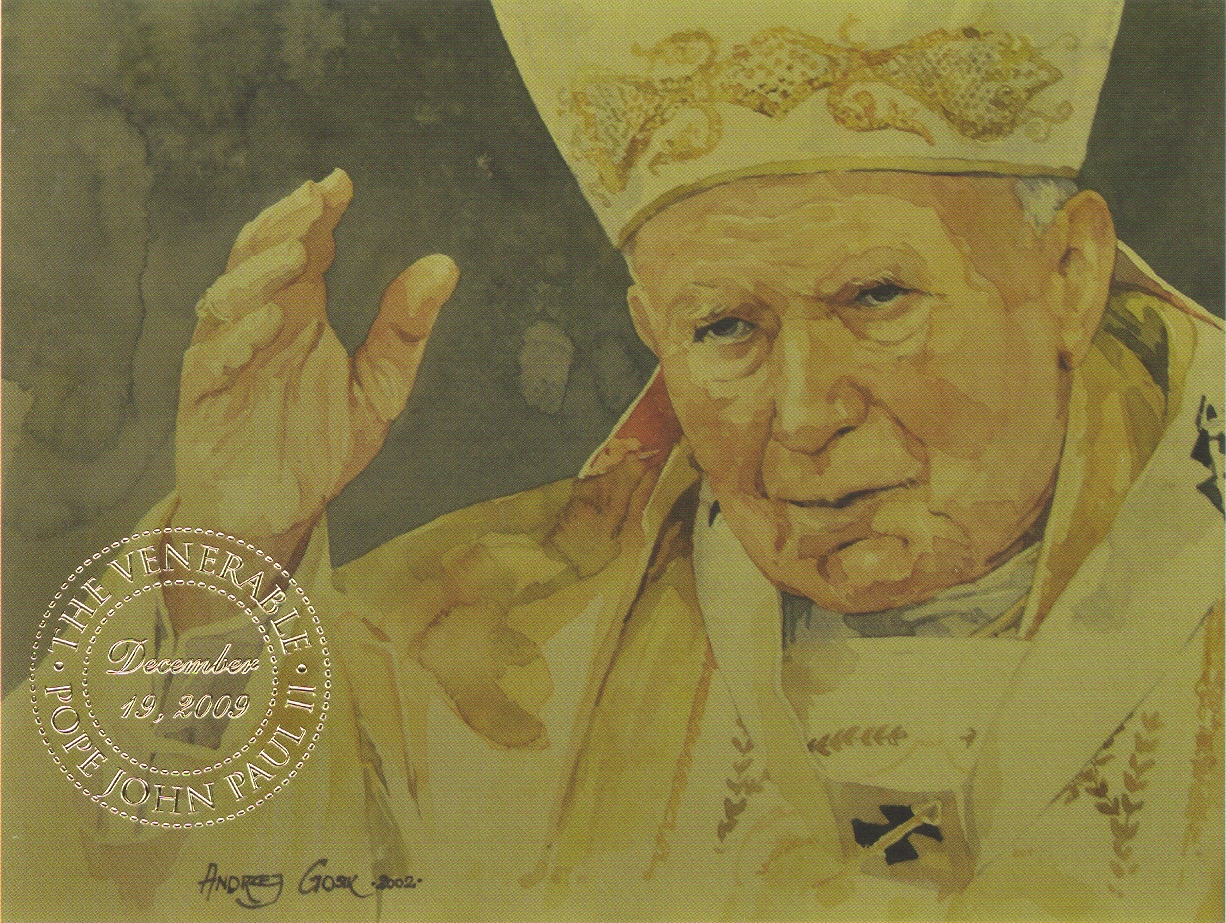
Beatification of Pope John Paul II...Next Year?

The beatification process for Venerable Pope John Paul II is apparently moving forward and the late pontiff could be beatified as soon as next year.


Right now a miracle cure attributed to his intercession is being investigated. The case involves a French nun who had suffered from Parkinson's disease for a number of years and was apparently cured just a few months after Pope John Paul's death. It's all addressed in the following brief video:


The beautiful Diane -- she who must be loved -- will undergo surgery tomorrow morning, so in my prayers I have been asking Pope John Paul II to intercede for her to guide the surgeon's hands and ensure the surgery is successful. I ask that you join me in this.

God's peace...

Theological Interpretation of Scripture

Back in 2003, two scriptural scholars, Ellen F. Davis and Richard B. Hays, edited a most interesting book entitled, The Art of Reading Scripture (Eerdmans). The book was the product of 15 scholars who contributed to what was called The Scripture Project, an attempt to restore and renew a theological approach to scriptural exegesis. One result of the project were these nine theses:
  1. Scripture truthfully tells the story of God’s action of creating, judging, and saving the world.
  2. Scripture is rightly understood in light of the church’s rule of faith as a coherent dramatic narrative.
  3. Faithful interpretation of Scripture requires an engagement with the entire narrative: the New Testament cannot be rightly understood apart from the Old, nor can the Old be rightly understood apart from the New.
  4. Texts of Scripture do not have a single meaning limited to the intent of the original author. In accord with Jewish and Christian traditions, we affirm that Scripture has multiple complex senses given by God, the author of the whole drama.
  5. The four canonical Gospels narrate the truth about Jesus.
  6. Faithful interpretation of Scripture invites and presupposes participation in the community brought into being by God’s redemptive action–the church.
  7. The saints of the church provide guidance in how to interpret and perform Scripture.
  8. Christians need to read the Bible in dialogue with diverse others outside the church.
  9. We live in the tension between the “already” and the “not yet” of the kingdom of God; consequently Scripture calls the church to ongoing discernment, to continually fresh rereadings of the text in light of the Holy Spirit’s ongoing work in the world.
As you can see by the above, these scholars are by no means slaves to the historical-critical method that has almost monopolized scriptural scholarship since the 19th century. Interestingly, these scholars, who come from a variety of Evangelical backgrounds, seem to reflect the teachings we encounter in Dei Verbum, Vatican II's Dogmatic Constitution on Divine Revelation. The Council Fathers, while affirming the value of historical-critical interpretation, also realized that, by itself, such an approach often leads to serious error. Pope Benedict XVI has addressed this dangerous tendency on numerous occasions; for example...
"...Scripture has become a word from the past that each person tries in his own way to bring into the present day; without being altogether able to trust the raft he is using for the purpose. Faith declines into a kind of philosophy of life, which each individual attempts to distill for himself from the Bible as well as he is able. Dogma, from which the ground of Scripture has been pulled away, no longer stands. The Bible that has freed itself from dogma has become a document about the past and, thereby, itself belongs to the past." [Joseph Ratzinger, God's Word: Scripture - Tradition - Office (2005), p. 98-99]
And so, for too many today, total reliance on this approach has turned the Bible almost into an historical artifact, no different from any other ancient document. Recognizing this danger the Council Fathers insisted that scriptural interpretation must also be theological if we are to understand the text as God's people. Once again, Pope Benedict XVI offers a clear solution:
"Perhaps the problems of current attempts can help us to understand again that faith is in fact the spirit from which the Scriptures were born and, hence, the only door by which we may enter into them." [Joseph Ratzinger, God's Word: Scripture - Tradition - Office (2005), p.126]
What a novel concept! Approaching Scripture theologically, from faith! And, apparently, it's a concept that thankfully seems to be catching on. A few months ago I devoted a brief post to some of my favorite scriptural commentaries. Among them was R. R. Reno's wonderful commentary on Genesis published by Brazos Press. Professor Reno's volume is just one in a still incomplete series that offers a theological, rather than a purely historical-critical, commentary on scripture. I can't recommend this series highly enough. 

And then there's a book that I am currently reading: Holy People, Holy Land. Also published by Brazos Press, its authors are Michael Dauphinais and Matthew Levering, two theologians who teach at Ave Maria University right here in Florida. The book provides a well-written and compact theological introduction to Scripture. Indeed, it's subtitle is just that: "A Theological Introduction to the Bible." I'm about half-way through and already intend to recommend it to those who participate in my two parish Bible Study groups.

Reading and understanding Scripture isn't easy; rather, for most Christians it becomes the work of a lifetime. But it's a task that can be eased considerably by good commentaries that help us understand, experience, and live the holiness and joy that God wants for us. 

God's peace...

Thursday, October 14, 2010

Eco-Fascist Freud

How's that for a post title?Actually it's pretty accurate. Some of you may have heard of, or even seen, the video that's floating around the Internet and depicting a classroom teacher vaporizing (a kinder, gentler description of what is actually portrayed in the video) students. The students, you see, resisted the politically correct, Al Gorish teachings of their wacko teacher. And because of their intransigence, the little reactionary brats are quickly, and quite messily, sacrificed to earth goddess Gaia, or whoever happens to be the goddess du jour. I should also note that the citizens of the UK paid for this production through their tax pounds. Might we soon expect some of the same here?

If you don't believe me, and want to watch the video, well, more power to you. I've included it below, but recommend it only for those who can handle it. I also think it's especially interesting that the fellow who produced it, Richard Curtis, is married to the lovely Emma Freud, Sigmund Freud's great-granddaughter. They are both radical environmentalists. Emma is not only Curtis' "life partner" with whom she has four children, but also his creative partner. Four children? Oh, yes, and three homes? That's one very large carbon footprint. Do I smell a bit of hypocrisy here?

Commenting on the video, which has the oh-so-ironic title, No Pressure, James Delingpole wrote in the Telegraph, "With No Pressure, the environmental movement has revealed the snarling, wicked, homicidal misanthropy beneath its cloak of gentle, bunny-hugging righteousness." Amen. Here we get a glimpse into the sort of fascist world the environmental extremists wish for, a world where those who resist or even question their junk science are quickly eliminated.

Makes me want to turn on all the lights and spread a little carbon around the neighborhood.

Wednesday, October 13, 2010

Homily for Today: Wednesday 28th Week of Ordinary Time

Readings: Luke 11:42-46

On our last trip to Rome, Diane and I visited an awful lot of churches. One of the more interesting things we did was visit the crypts, often located in dark and damp places far below the church itself. Down there you encounter the tombs of saints, and popes, and monks, princes and princesses, the rich and the poor, some well over 1,000 years old. Being there among our ancestors in faith is strangely comforting, and leaves me with a sense of peacefulness which I expect comes from our faith in the resurrection.

I also enjoy reading the inscriptions. The Latin sometimes takes a while to translate, but I usually figure out what they’re telling us modern visitors. Occasionally a worn marble slab has been walked on so much over the centuries that the name and inscription are indecipherable. This always saddens me. I want to know about the person buried there. What kind of person was he? Does anyone pray for his soul? It’s always seems a little tragic.

In today’s Gospel passage we encounter something equally tragic. Jesus, in response to the Pharisees’ continuous judgmental criticism, says, “You are like unseen graves over which people unknowingly walk.”  How tragic is that? And how it must have shaken the Pharisees. In effect, Jesus was accusing them of spiritual decay, but even worse in calling them “unmarked graves,” he is accusing them of contaminating others who don’t recognize the decay.

You see, the Pharisees were very religious men – religious but not necessarily holy. Their religion consumed their lives, and everything they did was measured against it. Quite literally, it meant everything to them. Unfortunately it left little room in their lives for either God or their neighbor.

Because their religion was an end in itself, God was left out of the picture, and what remained was a superficial religion – superficial in the strictest sense of the word: it was all about surfaces.  Jesus made this clear on another occasion when he said, “If your virtue goes no deeper than that of the scribes and Pharisees, you will never enter the kingdom of heaven.”
 
In their misguided zeal, the Pharisees required unnecessary and burdensome rules that obscured what was truly important. Instead of leading people to God, they led them to Pharisaism. And Jesus warns the people about them.

The main ingredient missing from their religion was God’s love, a love we are to share with the world. God is love and everything He does flows from His love for us. As Jesus showed us on the Cross, God’s Love is sacrificial, embracing and lifting our burdens. Without love, everything goes wrong. How could it be otherwise? When love is absent, God’s been rejected.

Of course, love’s not easy, and loving one another as God loves us can be very difficult indeed, the study and struggle of a lifetime. The Pharisees devoted their study and lives not to love but to their interpretation of Law and ritual.

It’s important to realize that Jesus isn’t criticizing ritual per se; no what He’s criticizing is the Pharisees’ placing more importance on observing proper ritual than on the observing the commandment to love God and neighbor. After all, as Catholics we observe many rituals. We’re observing one right now in the celebration of the Eucharistic sacrifice. And this is as it should be, because the rite is as old as the Church itself and its purpose is to bring us closer to God through hearing His word and receiving Jesus in the Eucharist.

But the ritual is a means, not an end. The end is not the ritual but our communion with Jesus. When we let this happen, when He becomes one with us, we also allow Him to transform us. In other words, what we do on the outside should help us change on the inside. But when we act like Pharisees and focus solely on the externals, we break this connection.

Do you allow the love of God to transform your mind and heart? And are you willing to carry your neighbor's burden? Do you avoid judging as the Pharisees judged? Jesus tells us clearly, and we should pay heed. We’re not to judge. It is for God alone to judge.

 “…God loves us as sinners and …the task of Christianity is not simply to teach us how to live, but to teach us how to live again, and again, and again.”

…because as sinners we are constantly falling…again, and again, and again.

This is the Good News -- that God loves each of us with a merciful forgiving love, a love that brings us to new life again, and again, and again!

Thanks be to God!

Tuesday, October 12, 2010

Elections, Politics and Faith

I think I can safely say that among many religious people there's a tendency to step away, sometimes far away, from the political process. But their hesitancy to get involved, or even to vote, seems to have less to do with the process itself than with the politicians who manipulate it. Given the continued degradation of political discourse in our nation, an increasing number of folks seem to be saying, "A pox on both your houses." 

I can certainly understand such attitudes since similar words have occasionally slipped off my tongue while watching the evening news. And with the mid-term elections only a few weeks away, political advertising has ramped up to an almost frenzied pace. Sadly, although the frequency of these ads has risen, their tone and content have sunk to an almost unprecedented level. When it comes to political ad production, the rule of thumb seems to be, "If your take on the issues is unpopular, distract the voters by launching personal attacks on your opponent. And don't worry about the truth; if you repeat the big lie often enough, people will come to believe it." More often than not, the object of such ads believes he or she has no choice but to respond in kind and we poor citizens are subjected to an ever-escalating cacophony of public name-calling that really has little to do with the issues confronting the nation.

Here in Florida, for example, one of our US representatives launched an attack ad in which he compared his pro-life opponent to the Taliban! Now, I'm certainly no expert on electioneering and campaigning, but I suspect such an ad will appeal only to pro-abortion extremists, really a rather small minority. I also think it will likely mobilize pro-life voters and, because of its shrill tone and inherent unfairness, might actually affect the votes of those who are normally indifferent to life issues. I may well be wrong but I still have faith that the average citizen wants to make what my brother, Jeff, used to call a "Superman vote"; that is, for "truth, justice, and the American way." I suppose we'll find out on November 2nd.

Anyway, I hope our fellow church-going citizens will all go to the polls next month and cast their votes intelligently and with faith. I won't presume to tell you for whom you should vote, but I will share some of the criteria I rely on when I step into the privacy of the voting booth.

First, I am a pro-life voter. In fact, I have never been able to cast a vote for anyone who supports abortion, the great evil of our time. Fifty million murdered babies in 37 years is, for me, simply too much for any so-called "pro-choice"candidate to overcome. In Massachusetts, where we lived for several decades, and where Democrats and Republicans often differ only on fiscal issues, I frequently cast no vote or wrote-in another name. Many of my more politically active acquaintances have criticized me for this, telling me I should vote for the "lesser of two evils." But I simply can't bring myself to do it; an evil is an evil. As a Christian and a Catholic I'm called to live my faith, not compartmentalize it. And as a sinner, well, I already carry enough excess baggage through life without adding more.

Second, I look for a candidate who possesses at least some degree of humility. A humble politician may sound like a contradiction in terms, but believe me there are some out there. Of course, almost every politician talks a humble line in public: I'm just a public servant...a plain ol' country lawyer...a man of the people...etc., etc... And I suppose most of us accept these comments at face value. But I'm always suspicious of those who actually talk about their humility. As my father used to say, "Humility's a strange commodity. Once you know you have it, you just lost it."

And so I tend to ignore most of what politician's say and focus instead on what they do. In this my criterion stems directly from the Gospel when Jesus told the Pharisees, "Render therefore to Caesar the things that are Caesar's, and to God the things that are God's" [Mt 22:21]. No politician who blatantly usurps God's role in the world by denying His authority in such areas as life, marriage, the family, etc., can hardly be called "humble." How did the serpent phrase it on his last visit to Eden? "...you will be like gods." And so I look for a candidate whose actions show humility in God's presence and in the presence of God's people.

Third, I disapprove of the idea of politics as a life-long career choice. Lord Acton's famous words about power corrupting come to mind when I encounter one of these career politicians who seems to believe that we, the hoi polloi, owe him his career and exalted place in society. All else being equal, if I'm presented with a choice between a career politician and a newbie, I'll always choose the latter. Experience in politics is greatly overrated. Too often the more experienced pol has just learned more ways, at best, to ensure his reelection and, at worst, to enrich himself. It's always refreshing to encounter a politician who agrees to self-imposed term limits and then actually sticks to them.

James Madison in Federalist #51 wrote, "If men were angels, no government would be necessary." Since we are, however, far from angelic, we not only need a government, but we also need controls on that government, reminders that the people, not the politicians, are sovereign. This is what our votes are intended to do. Don't waste yours.

Monday, October 11, 2010

Christians in the Middle East

Although Christians make up only a small minority in most Middle Eastern countries, there have been some interesting developments in recent years.

One statistic that might surprise you is that within the state of Israel the number of Christians has not been falling but has actually risen year after year since the nation's founding. In 1949 there were 34,000 Christians in Israel. As of 2008 there were over 150,000. Most of these Christians live in Galilee although some 15,000 reside in Jerusalem. As I said, this might surprise you because we have heard so much about Christians leaving the Holy Land in droves. The explanation involves the use of the words, "Holy Land," which is not well-defined and includes land under the control of the Palestinian Authority and Hamas. For some it even includes other neighboring nations such as Jordan, Syria, and Iraq, and even Turkey and part of Cyprus. In most of these Muslim-dominated countries, yes, the Christian population is decreasing. Indeed, in some the Christians who have remained live a day-to-day ghetto-like existence, never knowing when they might become the next victims of Jihadist terror.
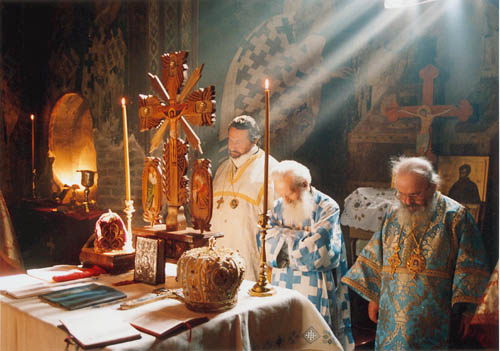
Byzantine Rite Liturgy

Middle Eastern Catholics are a varied group and belong to a number of autonomous, self-governing Eastern Churches, all in full communion with Rome and the Holy Father. Their liturgies are quite varied, as are many of their devotional traditions. Some of these Eastern Churches were at one time separated from Rome, but subsequently returned, while others have always been in full communion.

It's easy for us Roman Catholics of the Latin Rite to forget that there are 21 other rites in the Catholic Church, and all 21 are numbered among the Eastern Catholic Churches. In most instances we simply don't have much interaction with them at the parish or even the diocesan levels. And yet most of these Churches have an active presence right here in the United States. You may have encountered the faithful of some of these Churches -- for example, the Maronite Church, the Melkite Church, and various Byzantine Churches -- but many of the others are either very small or have little or no formal presence here in the United States. I suspect you haven't met too many members of the Syrian Catholic Church, the Chaldean Catholic Church, the Syro-Malabar and Syro-Malankara Catholic Churches of India, the Coptic Catholic Churches of Egypt and of Ethiopia and Eritrea, or the Krizevci Catholic Church. And there are others...If you would like to read a brief overview of each, try either of these websites: Eastern Catholic Churches or Catholic Near East Welfare Association.
A Melkite Church in New Jersey

If you ever have the opportunity to attend a Mass in one of these Eastern rites, I highly recommend it. Go online and locate the nearest parish of one of these Eastern Catholic Churches and check its Mass schedule. All of these rites have beautiful, although quite different liturgies. Just to give you and idea of what you might encounter, I've included a brief video highlighting a choir from St. Anthony Maronite Catholic Church in Lawrence, Massachusetts. The Maronite Catholic Church, which has its roots in what is now modern-day Lebanon, conducts its liturgy in Arabic, although the words of consecration are pronounced in Aramaic, the same language spoken by Our Lord.


One final note on the Christians of the Middle East concerns a unique group of Hebrew-speaking Christians who live in Israel. They are mixed group made up only partly of converts from Judaism, and many of these  came to the country during the many waves of immigration over the years. Others are immigrants from Catholic countries -- e.g. the Philippines -- who have assimilated into Israeli society and learned Hebrew. The rest include Lebanese Maronites and Arabic-speaking Palestinian Catholics who nevertheless send their children to Hebrew language schools. Because this diverse group has the Hebrew language in common, the Latin patriarchate of Jerusalem has given them their own vicariate and placed it under a convert who is now a Catholic priest, Fr. David Neuhaus. Fr. Neuhaus ministers to about 400 Hebrew-speaking Catholics, and about half are converts. Although they are a small group, they are growing and now have seven active communities throughout Israel. Now wouldn't that be interesting...attending a Mass celebrated in Hebrew.

I've included a brief video (below) on Fr. Neuhaus and his ministry.

Shalom!

Sunday, October 10, 2010

Middle East Synod of Bishops

You might not know about it because it hasn't received a lot of press in the secular media, but the Vatican is currently hosting a special synod of Middle Eastern bishops. The synod, which began today, will reflect on the theme, "The Catholic Church in the Middle East: Communion and Witness." Among the synod's objectives is to strengthen Christian identity and promote ecumenism among Christians in Muslim countries.

Shortly after the synod's opening liturgy, Pope Benedict XVI addressed the crowd in St. Peter's Square, telling them,

"This extraordinary synodal gathering, which will last two weeks, will see the meeting in Rome of the pastors of the Church that lives in the Middle East, a very diverse reality. In that land, in fact, the one Church of Christ expresses herself in all the wealth of her ancient traditions...In fact, in those countries, unfortunately marked by profound divisions and lacerations by age-old conflicts, the Church is called to be the sign and instrument of unity and of reconciliation, on the model of the first community of Jerusalem, in which 'the multitude of those who had become Christian were of one heart and one soul' (Acts 4:32)."
172 Catholic bishops from the Middle East, virtually all from Islamic countries, are taking part in the synod. The are joined by several dozen academics and other experts, plus a number of curial officials and 14 representatives of other Christian churches. In the words of the Holy Father they are confronted by "an arduous task since the Christians of the Middle East often find themselves having to endure difficult conditions of life at the personal, familial and communal levels."

These "difficult conditions" have caused Christians to flee the Middle East in huge numbers. Bishop Shlemon Warduni, an auxiliary bishop of the Catholic Chaldean Church in Iraq, expanded on the pope's comments when he stated, “The urgent reasons for this meeting are that Christians are fleeing from the Middle East, and extremist Islamism is invading the area. We need to find a dialogue with Muslims, and unity among Christians." This flight of Christians is particularly evident in Iraq where the Christian population has decreased from 1.2 million to 400,000 since 1987.

The working document for the synod is based on the responses to a detailed questionnaire submitted by the participants. The document states that  "Relations with Muslims are difficult principally because Muslims make no distinction between religion and politics, thereby relegating Christians to precarious positions of being considered non-citizens despite the fact that they were citizens of these countries long before the rise of Islam.”

Speaking of the synod earlier today, Jesuit Father Federico Lombardi, director of the Vatican press office, explained that...

"The Middle East is a region in which Christians are a minority, in some countries a very small one and without any political or social influence, and in [some] of these countries the situation of war or permanent tension weighs on hope for the future and marginalizes it. But it is also the region where Christianity was born, where it has very ancient traditional roots of extraordinary cultural and spiritual richness. Thus the problems of the Churches in the Middle East interest all of us and involve of us, and this is why the Pope convoked this assembly, which for the first time is dedicated not to a theme or a continent or individual country, but to a specific region of the world."
The following video provides an overview of the synod...


Pray for the Christians in the Middle East and for the success of the synod.

Saturday, October 9, 2010

Religion, Chrstianity and God... Oh No!

I'm not a big moviegoer, at least not in the theaters. These days, if I really want to see a particular movie, I'd rather save the money and catch it later on Pay-Per-View or NetFlix. But I just might make an exception for a film that's currently getting a lot of press: Secretariat. Much of the buzz about this film is good and many reviews reflect positively on the film's underlying Christian theme. But many other reviewers just can't stand the fact that the movie actually appeals to "faith-based audiences." 

Disney has marketed the movie to Christian reviewers, telling them "The movie is directed by Randall  Wallace….Not only is Randall one of the most successful directors of all time, he is also a devout Christian." This, the Hollywood crowd tells us, is overt "pandering." Personally I think it's refreshing to be told in advance that a film might actually not offend me and be worth watching. 

Wallace, by the way, is both the director and screenwriter of Secretariat. He was also the screenwriter for Braveheart and directed We Were Soldiers, so it's not as if he lacks the credits. He is apparently very open about his faith and in a recent interview stated, "Jesus didn't argue doctrinal questions whenever he was asked a question. He almost always responded with story -- because the stories carry more truth than our philosophical arguments do."

The Catholic League didn't hesitate to take on some of the reviewers who complained vociferously about the film's "niceness" and "Ozzie and Harriet" view of American life. The most outrageous of these critics was -- Surprise! Surprise! -- Andrew O'Hehir who penned his screed for Salon. I've included the Catholic League's comments below:

"SECRETARIAT" SPOOKS REVIEWERS

October 8, 2010

The movie "Secretariat" is the subject of Catholic League president Bill Donohue's news release:

Kudos to movie critic Roger Ebert, as well as to John Nolte at Breitbart.com, for lampooning Salon.com film reviewer Andrew O'Hehir's feverish take on "Secretariat." It's not just the movie's Christian overtones that upset O'Hehir, it's the alleged racism—even Nazi-driven—aspects of this "honey-dipped fantasy vision of the American past" that gets his goat. Indeed, he says, "it's legitimate to wonder exactly what Christian-friendly and 'middle-American' inspirational values are being conveyed here." All this paranoia about a horse.

While O'Hehir's review is the most apoplectic, there are others who at least share his uneasiness with all matters Christian. The Sarasota Herald is not happy with the movies' "barely concealed religiosity" and "all the talk about 'lifting up.'" The New York Times notes its "Bible-thumping" elements, while nj.com says, "the film is bookended by quotes from the book of Job, interrupted by mystical shots of clouds and sunbeams, and even has a scene where the horse gets a rubdown scored to a gospel song." Newsday goes so far as to claim that the director "insists on turning the horse into Christ himself," and New York 1 opines "it's a bit much" to endure "passages from the Bible and playing gospel music." Similarly, Hollywood.com complains the film "reeks" of "grandiosity," even to the extent of "using Old Testament quotations and gospel music."

By contrast, CNN.com and the Los Angeles Times both noted the Christian aspects of the movie, but were wholly free of the condescending and scornful commentary that marked these other reviews. 

No doubt about it, Christianity clearly spooks many of our elites.
There were many other very positive reviews, enough at least to make me want to see the movie. Pass the popcorn, please...


Friday, October 8, 2010

Persecution in Saudi Arabia

Did you know that there are somewhere around one million Catholics living in Saudi Arabia? Most of them are Filipinos hired by the Saudis to work as domestics or in similar jobs, largely low-paying, menial work. But because they live in Saudi Arabia where the law prohibits non-Muslims from worshiping except in private non-Muslim homes behind closed doors, it is almost impossible for them to attend Mass. This is not simply religious law, but the law of the kingdom.

This week 13 Filipinos, among them a Catholic priest, were arrested by the Mutawa. the very nasty Saudi religious police, because they were participating in a Catholic Mass held at a hotel. They were taken into custody when the police raided the hotel and shut down the Mass. Apparently there were upwards of 150 people attending but most were not detained because there was insufficient room at the local police station. The 13 arrested were charged with proselytizing. They were all eventually released on bail but still face some very serious charges under Saudi law. [See the article in the Arab News.]

Such charges stem from the Islamic fear of Muslims converting to other religions. Indeed, the harshest of punishments -- death -- can be handed down on those found guilty of the "crimes" of conversion or helping a Muslim convert. I suppose that's one way to keep the numbers up, just threaten to kill anyone who tries to abandon ship. And you thought the world had left all that behind a few centuries ago. But the Saudi's go even further: here's a link to a story describing the forced conversion of Filipino migrant workers in Saudi Arabia.

Mosque in Dearborn, Michigan
There are over 1,200 mosques in the United States. There are no Christian churches in the Kingdom of Saudi Arabia -- not a single church. And so, instead of wasting our time arguing about whether to build a mosque in lower Manhattan, perhaps we should just make its construction contingent on the building of a Catholic church in downtown Riyadh.

Of course, Saudi treatment of women who run afoul of the Mutawa is horrendous. Here's a quote from the book, Veiled Atrocities: True Stories of Oppression in Saudi Arabia:
The Saudi mutawas (“morality police”) are terrifying. Like vultures, they swoop down on their vulnerable prey, especially women, and then send them straight to Hell. The “long beards” curse and beat their female prisoner, totally terrify her; then, they throw her into a dark, medieval dungeon, (assume the worst here). They remove her only in order to gang-rape and torture her—all presumably in the name of Islam. Her crime? In one instance, although the woman was a foreign national, she dared to take a taxi downtown without a male escort.
Pray for the 13 who were arrested. And pray for the conversion of the world; after all, Jesus commanded us to "make disciples of all nations, baptizing them in the name of the Father, and of the Son, and of the holy Spirit" [Mt 28:19] -- pretty clear instructions.

And keep one thing in mind: As Christians we know we're doing something right when we get persecuted for doing it.

Wednesday, October 6, 2010

A Favorite Movie Scene

I have a dozen or so movies that I count among my favorites, and very few of them are of recent vintage. But some movies, although not great in themselves, do include great scenes. One of these scenes was in the middle of the film, "The Wind and the Lion" (1975), which starred Sean Connery, Candice Bergen and Brian Keith. (Interestingly, none of the stars appear in this scene.)

The film depicts the America of my grandfather, a man who fought in the Spanish-American War in the Philippines and in the Boxer Rebellion in China, a very different America from the one we live in today. I first saw the film when I was a naval officer serving aboard the USS Okinawa. I was seated in the ship's large hangar bay surrounded by about 1,000 Marines. Keep that fact in mind as you watch the clip. It was an amazing experience.

In the clip I've included below the actual scene begins at the 1:57 minute mark and runs through the end of the clip.


European Battles

Secular, anti-Christian forces in Europe, encouraged partly, I believe, by a general apathy among the populace, have been waging outright war against the Church and its teaching in recent years. The following stories from today's news each reflect a battle within this much larger war. In each case you can click on the title to read the details.
  • Physicians' Rights of Conscience. The European Parliament plans to vote on regulations that might well restrict the rights of physicians to avoid performing abortions, sterilizations, euthanasia and other procedures that violate their consciences and religious views.
  • Church Can't Dismiss for Immorality. The European Court of Human Rights has decided that a musician who violated his employment contract with a Catholic Church in Germany instead had his rights violated by the Church. The musician, who had agreed in his contract to live in accordance with Catholic values, ended his first marriage and had a child by another woman.
  • Cardinal Erdo Addresses European Demographic Crisis. One glance at the basic demographic data for Europe and it's apparent that the contraceptive mentality has taken firm hold of the population. Cardinal Erdo, the President of the Council of Episcopal Conferences of Europe (CCEE), made this point clearly in his comments regarding the theme of the Council's plenary assembly in Zagreb: "Unfortunately, today the family is often threatened by a selfish, relativist culture directed exclusively towards short-lived material well-being...many European countries do not have a healthy birth-rate...The demographic crisis and the crisis in the family institution are closely linked."
  • Nobel Prize Goes to Inventor of In Vitro Fertilization. The International Federation of Catholic Medical Associations (FIAMC) issued a statement in response to the awarding of the Nobel Prize for medicine to British biologist, Robert Edwards: "Although IVF has brought happiness to the many couples who have conceived through this process, it has done so at an enormous cost...undermining of the dignity of the human person. Many millions of embryos have been created and discarded during the IVF process." The Catholic doctors stated that they "recognize the pain that infertility brings to a couple, but equally we believe that the research and treatment methods needed to solve the problems of infertility have to be conducted within an ethical framework which respects the special dignity of the human embryo, which is no different from that of a mature adult with a brilliant mind."
These battles are not, of course, restricted to Europe. Indeed, they are being fought throughout the world. Europe just seems to be the favored battleground...at least for now.

St. Michael, pray for us.

Refutation of the Pew Forum Poll on Religion

A few days ago -- specifically, on September 30 -- I included a post discussing a poll taken by the Pew Forum in which they questioned people to determine their knowledge of things religious. At the time I had read only a brief Washington Post article on the poll and really hadn't examined the results very closely. Since then I've discovered that the results are really not all that horrible, certainly not as bad as I had previously thought.

And so I had planned to post a brief refutation of some of the conclusions, but then this morning a friend sent me a link to an article on the American Thinker's website that pretty much says it all...thus saving me a lot of effort. (The article's author, Tom Trinko, also writes a lot better than I.)  I'm still not very pleased with some of the poll's more obvious conclusions, but Mr. Trinko makes a number of valid points that take a bit of the sting out of the results.

You can read his article here: Flawed Pew Poll.

Tuesday, October 5, 2010

Red Mass Homily to the US Supreme Court

Archbishop J. Augustine DiNoia, O.P.(photo at left), Secretary of the Vatican's Congregation of Divine Worship, was the homilist at Sunday's annual Red Mass celebrated at the Cathedral of St. Matthew the Apostle in downtown Washington, D.C. The Red Mass traditionally marks the beginning of the Supreme Court's session and was celebrated by Washington Archbishop Donald W. Wuerl.

The fact that six of the nine Supreme Court justices are Catholic adds a bit of import to the Red Mass this year. Four of the Catholic justices attended the Mass while two did not. Chief Justice John G. Roberts Jr. attended, along with Justices Samuel A. Alito Jr., Antonin Scalia, and Clarence Thomas; but Justices Anthony M. Kennedy and Sonia Sotomayor did not. Also attending was Justice Stephen G. Breyer, who is Jewish. Justices Ruth Bader Ginsburg and Elena Kagan, both also Jewish, did not attend the Mass. As you can see, for the first time in the court's history there are no Protestants among the justices -- really a rather odd turn of events.

Archbishop DiNoia, an American Dominican, who in years past would occasional celebrate Mass and preach at my former parish on Cape Cod, has moved on to greater things. I always found his homilies enlightening and inspired, and expected his Red Mass homily to be the same. I wasn't disappointed. It was especially heartening to see that he directed these words to the justices:

The words of the prophet Ezekiel recall another important element in our invocation of the Holy Spirit today. "I will put my Spirit within you," he says, "and make you live by my statutes, careful to observe my decrees." Positive law rests on certain principles the knowledge of which constitutes nothing less than a participation in the divine law itself: the pursuit of the common good through respect for the natural law, the dignity of the human person, the inviolability of innocent life from conception to natural death, the sanctity of marriage, justice for the poor, protection of minors, and so on. The legal profession is entrusted with the discernment and administration of justice and the rule of law according to an objective measure -- in effect, according to principles -- not of our own making. A consensus about these principles inspired the founders of modern democracies, and although it was profoundly influenced by Judaism, Islam, and Christianity (think of Averroes, Maimonides and Aquinas), this consensus was understood to transcend religious and cultural differences. Thus, it follows that the invocation of the Holy Spirit in the Red Mass is a prayer for light and guidance. Among the things for which we ardently pray is the wisdom to affirm and maintain those profound truths about human nature that are at the foundation of the common life we treasure in this great nation. "Holy Spirit, Lord of Light ... / Come thou light of all that live ... / Light immortal, light divine." 
You can read the entirety of Archbishop DiNoio's homily here. It also includes a brief historical note on the origin and continued tradition of the Red Mass.

Pray for our Supreme Court justices, that their decisions will always reflect God's will.

Monday, October 4, 2010

Celebrating Life in Wildwood, Florida

On Respect Life Sunday, October 3, about 50 members of our parish, St. Vincent de Paul in Wildwood, Florida, picked up signs and spent two hours in front of the Wildwood City Hall greeting motorists as they drove by on Main Street (US Rt. 301). We were joined by members of several other local churches, and the whole event was organized by our local Knights of Columbus Council.

By Paul Nichols (catholiccartoonblog.blogspot.com)

It was an absolutely beautiful day and the response from the passing motorists was wonderful. We waved our signs and greeted each vehicle, and they beeped their horns and waved and shouted words of encouragement. At one point about 30 bikers roared by on their Harleys and gave us a rousing cheer. I didn't see or hear anything negative all afternoon from those who passed by. We also joined together and prayed the Rosary for the advancement of a culture of Life in our nation.

Praise God and pray for Life.

Setting up shop on Main Street


We prayed the Rosary together
Greeting passing cars with a smile and a message
Deacon Byron stretching for Life
...and the young joined us too
 ...as I said, it was a wonderful day.

The Crucified Rabbi

As you know from previous posts, one of my interests is the Jewish origins of Catholicism and the fulfillment of the Old Testament in the New. And on several occasions I have mentioned the Association of Hebrew Catholics (AHC), a wonderful group of Catholics who also happen to be ethnic Jews, as well as the books of Roy Schoeman: Salvation is from the Jews and Honey from the Rock. 

Today I have another recommendation for you. Taylor Marshall, whose blog Canterbury Tales is always a good read, has written a marvelous book on a similar subject: The Crucified Rabbi: Judaism and the Origins of Catholic Christianity. A former Episcopal priest who converted to Catholicism, Taylor Marshall is currently a doctoral student at the University of Dallas. He was also one of the speakers at the AHC's recent (Oct. 1-3) conference held in St. Louis.

Although the following video is an online ad for Marshall's book, it's really quite interesting.


God's peace...

Sunday, October 3, 2010

Pope Benedict and Religious Freedom

During his visit to the UK, Pope Benedict XVI met with representatives of other major religions, including Jews, Hindus, Muslims and Sikhs. In his address one of his key points was his affirmation of religious freedom. Although he didn't directly mention the persecution of Christians by Muslim and Hindu extremists in many parts of the world, he did ask that people of all faiths be allowed to worship freely and to convert to another faith. He pleads for reciprocity and mutual respect:

"Ever since the Second Vatican Council, the Catholic Church has placed special emphasis on the importance of dialogue and cooperation with the followers of other religions. In order to be fruitful, this requires reciprocity on the part of all partners in dialogue and the followers of other religions. I am thinking in particular of situations in some parts of the world, where cooperation and dialogue between religions calls for mutual respect, the freedom to practice one’s religion and to engage in acts of public worship, and the freedom to follow one’s conscience without suffering ostracism or persecution, even after conversion from one religion to another. Once such a respect and openness has been established, peoples of all religions will work together effectively for peace and mutual understanding, and so give a convincing witness before the world."

The below video provides a brief overview of the Holy Father's comments.


You can read Pope Benedict's entire address here.

Pray for persecuted Christians.

Saturday, October 2, 2010

Questions and more questions...

Sometimes questions have unexpected answers. For instance...

Worldwide, when it comes to deaths attributed to hate crimes, what religion is most represented among the victims?

No, the answer isn't Islam. Actually, 75% of the deaths from hate crimes are of Christians. In a recent press release the Commission of the Bishops’ Conferences of the European Community (COMECE) included this statistic and also stated that "Each year 170,000 Christians suffer because of their beliefs. The total number of faithful who are discriminated amounts already 100 million. This makes Christians the most persecuted religious group.” (Click here to read the COMECE press release)

When was the last time you were persecuted for your faith? Was your parish church ever burned down by an angry mob? How many times has the government prohibited your priest from celebrating Mass or barred your children from receiving religious education? Has your bishop ever been imprisoned simply because he was your bishop? How about your pastor? Have any of your fellow parishioners been beaten or murdered solely because of their faith? Have you ever been fired from your job because you were a Christian?

If you live in the United States or Europe it's highly unlikely you have experienced any of these forms of overt persecution. But millions of Christians throughout the world have and continue to suffer today. The European bishops stated that "Europe cannot remain passive. The European Union must take the co-responsibility for the protection of religious freedom in the world.”

Well, if it's true for Europe it should be true for the United States as well, and as citizens we should demand action on the part of our government. Of course, one problem is that many Western so-called democracies are led by people of little or no religious faith. Having exiled themselves from the remnants of Christendom, they're not particularly fond of the Catholic Church which is always raising moral red flags in the face of the electorate. I suspect they tend to view all religions as irritants and their adherents as fanatics. And so I wouldn't expect a lot of support from folks who probably aren't really all that bothered by reports of religious persecution.

Sadly most politicians are motivated solely by the next election. (As you can guess, I really don't care much for today's politicians regardless of their party affiliation.) One way to get their attention on any moral issue is to make them believe their reelection depends on it. And the best way to do that is to get the electorate energized. We have spent decades trying to stop the horror of abortion, but we've focused most of our energy on politicians. We should have been focusing on the people, the man and woman in the street and in the pews. Over the years I've walked alongside a lot of bishops and priests (and deacons) on pro-life marches in Washington and elsewhere, but I've heard very few pro-life homilies from those same men. When was the last time you heard someone preach on the Church's teaching on artificial contraception? After all, as Pope Paul VI accurately predicted, the contraceptive mentality would ultimately lead to the legalization of abortion and other symptoms of the culture of death. When was the last time you heard a homily address the persecution of Christians throughout the world? Or the dangers of homosexual "marriage"?

We clergy have failed the laity on many of these moral issues. The only issues we preach about are the "safe" ones, the politically correct ones, the peace and justice issues that generate nothing but nods of agreement in the pews. Everyone wants to feed the hungry, to house the homeless, to help the immigrant, to rehabilitate the prisoner...and rightly so. But what about that culture of death? As one deacon told me, "My pastor ordered me not to preach pro-life homilies. He feels they make too many people uncomfortable." I suspect he also worries that all those "uncomfortable" parishioners just might leave their checkbooks at home on Sunday.

And so, it looks as if it's up to the laity. The only way we will turn the tide and create a culture of life, the only way we will give relief to persecuted Christians is through the prayer and efforts of individual Christians. They are called to take the truth of the Gospel to their families, friends, neighbors, colleagues, schoolmates, golfing buddies, local politicians -- to everyone -- and to do it one person at a time. After all, that's exactly what the new evangelization is all about.

Let me conclude with another question on another subject. The US bishops have said and written a lot about the need for comprehensive immigration reform, which would presumably include some form of amnesty. I really have no problem with that, just not as a primary solution to the illegal immigration problem. My question is: Have you ever heard our bishops address the causes of illegal immigration? In other words, why do millions of people leave their homes and make the dangerous journey to the United States? We all know the answer to that, and I can only assume the bishops do too. But have you ever heard them publicly condemn the corrupt and authoritarian governments of these nations? Have they joined with the bishops of those nations to explore ways to change these governments and encourage education and free-market economies that give people real opportunity? Just asking. After all, attacking the cause of a problem is always more productive than just treating the symptoms.