Friday, October 28, 2022
Snippets of Sad News
Wednesday, October 26, 2022
OK, Here's What I'm Reading
In recent weeks I've had several of my Bible Study participants ask me what I'm currently reading. I'm not sure why they'd want to know; after all, my reading habits are likely no more interesting than anyone else's. Anyway, my tastes in books can also be a bit off-putting to some folks. For example, I rarely read modern novels, and by "modern" I mean anything written during the past 30 or 40 years. There are exceptions; indeed, one of the books I'm currently reading would certainly be labeled a modern novel, but I was introduced to other works by the same author and enjoyed them. The reason I avoid most modern fiction? There's far too much of it and I have so little time to sort out the bad from the not-so-bad. There's really very little good. I hate to waste precious time (and inflationary cash) on something not worth reading, so it's safer to wait several decades and ask a few simple questions:
- Is it still in print? This isn't always a good benchmark, but it does limit the field. Multiple printings tell us little about the critics, but a lot about the general public; and I trust the latter more than the former. The public isn't always right, but it's more right than most critics.
- The above leads to another set of criteria: Who likes it and who doesn't? Is it on the "must read" list of someone I know and trust? Or is it on the "hated list" of someone whose opinions I regularly dismiss as foolish? A "yes" answer to both questions is a definite plus.
- Is it a seminal work, one of those truly influential books that has changed the world? Its impact might have been horribly negative, like Mein Kampf or Das Kapital, or very positive, like Augustine's Confessions or Russell Kirk's The Conservative Mind. I read them all, since ignoring them leaves one ill-equipped to cope with their consequences.
- Finally, is it a book I will simply enjoy? For example, Flannery O'Connor's letters, published posthumously as The Habit of Being is one of those books to which I often return. O'Connor was always interesting and usually quite funny. I also enjoy the works of Jane Austen, Gene Wolfe, Alice Thomas Ellis, G. K. Chesterton, V. S. Naipaul, P. G. Wodehouse, Evelyn Waugh, Mark Helprin, Maurice Baring, and so many others.
The Case for Jesus (2016), by Brant Petre. This little book should be read by all Christians who have become confused thanks to the work and commentary of so many of today's New Testament scholars. Brant Petre, a Catholic Scriptural scholar, lays bare the false assumptions and conclusions of the form critics who unfortunately have led so many Christians astray and been the cause much lost faith. Focusing on the Gospels, Petre digs deeply into the original manuscripts, as well as the works of Early Church Fathers, proving, as the Church has always taught, that the Gospels were actually written by Matthew, Mark, Luke, and John and relate the truth about the life and public ministry of our Lord, Jesus Christ. Although written for the layperson, Petre provides detailed references and documentation for anyone who desires to pursue the subject in greater depth.
The Decline and Fall of Sacred Scripture (2021), by Scott Hahn & Benjamin Wiker. Here we have another wonderful book focusing on the truth of Sacred Scripture and the attempts by many scholars to turn the Bible into just another book of tall tales. The authors provide an overview of the degradation of Scriptural scholarship over the centuries, and its negative effects on the faith of millions of Christians. From Marsilius and Ockham in the late medieval period, through the Reformation, and into our modern times, we are shown how Sacred Scripture has been radically attacked by generations of scholars who, in the words of one reviewer, left "an incoherent mess" in their wake.
"Divine design is either nothing or everything; and if it is everything, then it extends even to randomness and apparent meaninglessness, to the puzzling presence of evil and the absence of scientific proofs. The hypothesis of faith may not be provable, but it is believable. The doors in the walls of the world may be only loose threads, but they are there."
Because I've long accepted God's omniscience and omnipotence, I had never believed in mere coincidence. Here Kreeft extends this to include a rational disbelief in both randomness and meaninglessness. It's a wonderful book.
And that's enough. Blessings and God's peace...
Thursday, October 20, 2022
Evangelization and Truth
“I have neither silver nor gold, but what I do have I give you: in the name of Jesus Christ the Nazorean, rise and walk” [Acts 3:6].The man was instantly and completely healed. Peter had then gone on to proclaim the truth about Jesus Christ to the Jewish crowds gathered within the Temple precincts at Solomon's Portico. His preaching led to a remarkable result:
"...many of those who heard the word came to believe and the number of men grew to about five thousand" [Acts 4:4].
This, of course, was too much for the Jewish authorities who had the two apostles arrested. After a night in custody, Peter and John were brought before the Sanhedrin for questioning. They were asked a single question:
“By what power or by what name have you done this?” [Acts 4:7]
Inspired by the Spirit, Peter gave the perfect response, a brief but remarkable sermon:
“Leaders of the people and elders: If we are being examined today about a good deed done to a cripple, namely, by what means he was saved, then all of you and all the people of Israel should know that it was in the name of Jesus Christ the Nazorean whom you crucified, whom God raised from the dead; in his name this man stands before you healed.
He [Jesus] is ‘the stone rejected by you, the builders, which has become the cornerstone.’ There is no salvation through anyone else, nor is there any other name under heaven given to the human race by which we are to be saved” [Acts 4:8-12].
Here we have a true homiletic gem. Within it we find a statement that offers us one of Christianity's absolute truths. Reread Peter's last sentence in which he provides the perfect declaration of salvation that comes to the human race only through Jesus Christ.
In Peter's words we encounter the universality of the Christian message, a message we are called to proclaim to every human being. Just consider Jesus' final words to the disciples before His Ascension to the Father:
“All power in heaven and on earth has been given to me. Go, therefore, and make disciples of all nations, baptizing them in the name of the Father, and of the Son, and of the holy Spirit, teaching them to observe all that I have commanded you. And behold, I am with you always, until the end of the age” [Mt 28:18-20].
This is a command by Jesus, a three-fold command: (1) make disciples of all nations; (2) baptize them; and (3) teach them. And it's followed by a promise: "I am with you always." If we are called to "make disciples of all nations," Christianity, then, is truly catholic. With these words, we realize God desires all to be saved through Jesus Christ [Acts 2:21; 1 Tim 2:3-4; 2 Pt 3:9] Although "for God all things are possible" [Mt 19:26], He instructs us to help bring this about through sacramental Baptism, supported by the continued presence of Christ's Holy Spirit in the teaching authority -- the Magisterium -- of the Church.
We are called to follow Peter's example and always proclaim the truth to those who do not believe. The problem, however, is that so many Christians, including many Catholics, seem either to reject this command of Jesus or simply fear to express the truth. Too many of us have grown a bit wobbly when it comes to evangelizing in truth. We either water down the Church's teaching or fall prey to a kind of syncretism in which all religions are considered okay. Once, while teaching a course on World Religions to a class of Catholic catechists and teachers, I was surprised when many thought there was no need to evangelize Jews, Muslims, Buddhists, or others who reject our Christian faith. As one high school teacher said, "As long as they follow their religion's teachings, I'm sure they'll be okay with God." Well, that may be true, but that's God's call, not ours. We're called to obey Him, to evangelize, to follow the example of the apostles. We must always remember: you and I cannot convert anyone; we simply plant seeds, or water and fertilize the seeds others have planted. God, and only God, brings all to fruition.
Like the apostles, we Christians have been commissioned to proclaim the Good News of Jesus Christ to the world, the entire world. This doesn't mean we do it arrogantly or haughtily. Not at all. We are commanded to do all this with love, but to love without forsaking the truth. As Peter told the beggar: "...what I do have I give you." We must do the same, give whatever we have, however the Spirit inspires and equips us. We must also live the truth of Jesus Christ so others will recognize Jesus Christ in us, just as we see Jesus Christ in them. And in doing so, we must also be ready to stand for the truth even at the cost of our lives, these days an increasingly likely possibility.
Wednesday, October 19, 2022
It’s Time for Our Bishops to Act
“What the president believes is that there should be a fundamental right for a woman to choose what to do with her own body and the President has said this time and time again, that there are basic, fundamental rights, access to health care, this access to health care includes women across this country. And what we expect to see is that, especially college-aged women, women who’ve had to face these very difficult choices will be reminded of this, especially during this season. And it’s something that we can’t ever put too far behind us because, again, we know that elections matter and we know that congressional Republicans want to take us back. I’m 52 years old. In my lifetime, I’ve always known that a woman has a right to make decisions about her own body and what we are seeing being put forth by congressional Republicans right now takes us back more than 50 years.”
“What the President has said very publicly is that he supports a woman’s right to choose. I’ve never heard the President give a timeframe on that. But he has said that he believes that a woman has a fundamental right to make decisions about her own body and her healthcare choices.”
The next question, then, should be asked of the Catholic Bishops of the United States. If President Biden, who frequently declares himself to be a "devout Catholic," absolutely denies the Church’s consistent magisterial teaching on life and a host of other moral issues, should he be allowed to partake in the Church’s sacramental life? Just consider the scandal the President causes as he publicly attacks the Church by denying its teachings and, as one parishioner remarked the other day, “…just gets away with it. Where are our bishops?”
Yes, indeed, where are our bishops? One priest told me they likely hesitate to get involved in what they view as political issues, something that might influence elections. I think my response surprised him. I simply said the Church has always taught that the goal of evangelization is to ensure the Good News of Jesus Christ reaches individuals and also penetrates and transforms cultures, highlighting and lifting up those aspects of culture relevant to the Gospel.
"Go, therefore, and make disciples of all nations, baptizing them in the name of the Father, and of the Son, and of the holy Spirit, teaching them to observe all that I have commanded you. And behold, I am with you always, until the end of the age” [Mt 28:19-20].As Pope St. Paul VI reminded us:
“…The split between the Gospel and culture is without a doubt the drama of our time, just as it was of other times. Therefore, every effort must be made to ensure a full evangelization of culture, or more correctly of cultures. They have to be regenerated by an encounter with the Gospel. But this encounter will not take place if the Gospel is not proclaimed” [Evangelii Nuntiandi, 20]
“A faith that does not affect a person’s culture is a faith 'not fully embraced, not entirely thought out, not faithfully lived.'” [Christifidelis Laici, 59]It’s time to act and restore a culture of life in our nation and in the world. We each have a part to play in this drama, but our bishops should lead the way and set the example for the faithful.
Tuesday, October 18, 2022
Homily: Feast, St. Luke, Evangelist
I didn't actually preach this homily today, since the celebrant decided to preach, which is certainly fine with me. But since I had prepared a homily for St. Luke's feast day, I thought I might as well post it here.
____________________________
Readings: 2 Tim 4:10-17b; Psalm 145; Luke 10:1-9
____________________________Today we celebrate the feast of St. Luke, evangelist and companion of Paul – author of the Gospel that bears his name and also the author of Acts of the Apostles. Of all those early Christians, those we read about in the Gospels and in Acts, Luke is the one I’d most enjoy meeting and spending some time with.
He was a physician – “beloved physician” Paul calls him – and therefore like Paul an educated man – something that’s evident by the quality of his writing. Most scholars believe he was a Greek and a Gentile, but whatever his background, it’s apparent Luke was in the first wave of Gentile converts to the Faith.
His Gospel was aimed at the Gentiles, those unfamiliar with Jewish Law and custom. In other words, he wrote for folks like you and me, so his approach is quite different from the other Synoptic gospels. For one thing, he rarely quotes the Old Testament, and never refers to Jesus with the Hebrew title of Rabbi, but always with the Greek title of Master. Unlike Matthew, Luke doesn’t trace Jesus’ genealogy from Abraham (the founder of the Jewish race) but from Adam (the ‘founder’ of the human race).
Luke gives women a more prominent place in his Gospel. The nativity and infancy story, much more extensive in Luke’s Gospel, is told from Mary's point of view. And it’s through Luke that we know about Elizabeth, Anna, the widow of Naim, and the woman who anointed Jesus’ feet.
Luke also gives us some of the most beautiful parables, for example, the Prodigal Son; and only Luke relates the parable about the non-Jew, the Good Samaritan. Without Luke we wouldn’t have the road to Emmaus or those three great canticles -- Mary’s Magnificat, Zechariah’s Benedictus, and Simeon’s Nunc Dimittis – canticles we pray every day in the Liturgy of the Hours. But what I like most about Luke’s Gospel is the emphasis he places on prayer and praise, and the mercy and goodness of God. He describes Jesus praying at all key moments of his life.
What sort of man was Luke? Well, in today’s first reading we get a glimpse of the real Luke. Writing to Timothy, Paul describes how he’s been abandoned by co-workers and friends except for two key companions.
Onesiphores, had traveled far and found Paul, seemingly without help from the Christians in Rome. And Luke who had remained with Paul, endured the imprisonment with him and cared for him. It would seem Luke’s friendship was important to Paul. Cut off from his own community, perhaps unappreciated by the Roman Christians, Paul faced certain execution, and was unable to move about and preach the Good News. We sense his loneliness.
Luke, trying to complete his texts, found himself attending to Paul who was probably held in some sort of house confinement or possibly even imprisoned. We can only imagine what this friendship might have cost Luke personally. He probably wondered whether he’d also be caught up in Rome’s campaign to destroy the Christian message. But his loving care remained authentic, and he stayed beside his friend.
True friendship is a uniquely human experience and is often most clearly shown by the small acts of care and attention one person shows for his or her friend. It’s also a simple thing, something in which even a child can participate. And yet it has a divine element as well. Listen, again, to these words from today’s psalm:
“Your friends make known, O Lord, the glorious splendor of your Kingdom” [Ps 145:12].
Yes, the compassion and love that
are the signs of friendship are also signs of the Kingdom of God, signs of
God’s grace. Knowledge of the Kingdom is made possible by experiencing the
quality of love that a friend bestows.
The Gospel, too, invites this insight. Friendship brings a Spirit of Peace with it; and where the Spirit of Peace is found, one discovers true hospitality. It is, then, in the heart of true friendship that the lost, the lonely, the abandoned, the imprisoned, the hurting, and the broken find encouragement and are made whole and healthy and strong again.
Saint Luke is the patron of physicians, not just because he was one himself, but because he was a healer of the both the heart and the soul. He was a true friend to Paul, who no doubt was in great need of consolation.
But St. Luke is also recognized as a friend of the poor and the outcast, because he recorded how Jesus took pains to care for the least, the most rejected, the impoverished. At the Last Supper, Jesus set the example for all of us saying, “I call you friends,” because a friend will lay down his life for the other.
Luke, recognizing the divine character of this most human of relationships, followed the Lord’s example. Perhaps, then, we should honor St. Luke as the patron saint of friendship.
Friday, September 30, 2022
Pope Francis, Giorgia Meloni, and Me
Every so often, probably more often than I would like, someone will ask me, "Deacon, what do you think of Pope Francis?" The questions come from across the entire spectrum of Catholic opinion. But most who ask me about the pope are simply looking for direction and understanding. Occasionally, though, I suspect I am being baited by those few who intend to argue a point, whether theological, ideological, or simply political. They hope to hear me state either my total agreement with the Holy Father or my complete disagreement. I always disappoint them because I'm never in complete agreement or disagreement with any mere man or woman, even the pope. I try to weigh what others say against what I know to be the truth, particularly the revealed truth given to us by Jesus Christ and taught to us by the Church He founded.
Do I agree with everything Pope Francis has said and written? Probably not, but this might well be the result of a lack of understanding on my part. This came to mind today when I read some of the comments made by the newly elected Prime Minister of Italy, Giorgia Meloni. Many on the left, including our president, have accused her of fascist sympathies. This, of course, is completely absurd and demonstrates either their ignorance -- they don't know what fascism is -- or their willful dishonesty by accusing their enemies of their own ideological beliefs, a common tactic of the left.
Here's how the new prime minister describes her beliefs that center on the family, her Christian (Catholic) faith, her patriotism:"Why is the family so frightening? There is a single answer to all these questions. Because it defines us because it is our identity. Because everything that defines us is an identity, and for those who would like us to no longer have an identity and simply be perfect consumer slaves.”
Then, describing those she calls "financial speculators," she says:
“They attack national identity, religious identity; attack gender identity and family identity. I can’t define myself as Italian, Christian, woman, mother. Now I must be citizen X, gender X, parent one, parent two. I must be a number because when I’m only a number, when I no longer have an identity or roots, then I will be the perfect slave at the mercy of financial speculators.
We will defend the value of the human being -- every single human being.”
If these are the words of a fascist, then I guess I'm one too. Of course, what she said really represents the core beliefs of a Christian society. And I especially liked what she had to say about herself, a self-appraisal summed up in a few choice words:
“I am Giorgia, I am a woman, I am Italian, I am Christian. You can’t take this away from me!”
As you might expect, such a simple, straightforward self-description drives the woke crowd in Washington and Brussels to distraction. She actually cherishes her unique identity: the name she received at her Baptism; the sex with which God blessed her at conception; the nation and culture in which she was born and raised; and the Christian faith that rules her life. As she stated, "You can't take this away from me" because they are all gifts from family, from God, and from a culture.
In her autobiography Giorgia Meloni waxed eloquently on the evil of political correctness:
“You see, political correctness is a shockwave, a cancel culture that tries to upset and remove every single beautiful, honorable, and human thing that our civilization has developed...It is a nihilistic wind of unprecedented ugliness that tries to homogenize everything in the name of One World. In short, political correctness – the Gospel that a stateless and rootless elite wants to impose – is the greatest threat to the founding value of identities.”
I've included all this just to give you a sense of who Giorgia Meloni truly is, so you won't be led astray by the woke, mainstream media, a media that truly despises this woman. But now let's look at what she has said about her Catholic faith and Pope Francis. The following brief comments are sufficient.
She said this about Pope Francis:
“Maybe it’s age, maybe the memories, but even though I’m Catholic and I’ve never allowed myself to criticize a pope, I admit that I haven’t always understood Pope Francis...Sometimes I feel like a lost sheep, and I hope one day to have the privilege of being able to talk to him, because I’m sure that his big eyes and his direct words can give meaning to the things I don’t understand.”
When I read those words, I almost fell out of my chair, because they reflect my own sentiments almost exactly. I have found so much that is good and valuable in what the pope has said and written, and yet, like Giorgia Meloni, there is much that I simply do not understand. I, too, will not openly criticize the Holy Father, but perhaps in an upcoming post I might share some of my misunderstandings. In the meantime, all of us should pray daily for Pope Francis, the Vicar of Christ, and successor of St. Peter. And pray, too, for Giorgia Meloni. I suspect she might need a lot of God's help as she tries to drain the Roman swamp.
Tuesday, September 27, 2022
Homily: Memorial of St. Vincent de Paul
Readings: 1 Cor 1:26-31;
Psalm 112; Mt 9:35-38
A wonderful day today, the memorial of our parish’s patron saint, St. Vincent de Paul, who devoted his life and ministry to serving the poor and the forgotten, and had a lasting impact throughout the world. How blessed we are that he intercedes for the good of our parish and the needs of our community.
Back in May of 1985, on a business trip to Europe, I spent a
weekend in Paris. It wasn’t planned as a pilgrimage, but it kind of turned into
one. I visited Notre Dame Cathedral and Sacre-Coeur, but I also
went to the Lazarists Mission where the remains of St. Vincent de Paul are interred. His
remains are inside a waxy effigy that’s not easy to find, but I’d been tipped
off in advance and so managed to find the saint.
As I spent a few minutes in prayer, I noticed the small crucifix in his hands. Later I was told by a friend that Vincent was called to the bedside of King Louis XIII in May 1643 and held that crucifix before the eyes of the dying king. That this man, so devoted to the poor and dispossessed, should have been called to the bedside of the king tells us much of the effect Vincent had on every element of French society. St. Vincent’s deep love for the poor was not so exclusive that he couldn’t assist a king in his dying hour. As St. Paul reminded us in today's reading:
“God chose the weak of the world to shame the strong, and God chose the lowly and despised of the world, those who count for nothing, to reduce to nothing those who are something…” [1 Cor 1:27-28]
You can
be sure Vincent reminded the dying king that he would leave this world powerless
and in poverty, and yet would still be showered by the Father’s love. After
all, at the very heart of the Gospel are those words from John, “For God so
loved the world that He gave His only Son…” [Jn 3:16] -- precious words that
reveal to us the cost to the Father’s heart: ‘He gave…”
This
shouldn’t surprise us, here in a parish dedicated to this remarkable saint, who
mirrored God’s loving care for those forgotten by the world. We, then, are called
to be a community of love, a work in progress, with a heart that strives to emulate
Vincent and serve all who come to us in need.
The love in St. Vincent’s heart, and I hope in ours as well,
is the same love of God Paul told the Romans “has been poured out into our hearts through the Holy Spirit that
has been given to us” [Rom 5:5]. Yes, indeed, it’s
the Holy Spirit who works through us to do God’s work in the world. And that’s
what we must always remember…
As the Psalmist reminds us: Non nobis, Domine, non nobis…Not to us, Lord, not to us, but to your name give glory. It’s God’s work, not ours. It’s for God’s glory, not ours. You and I must draw our inspiration and strength, just as St. Vincent did, from Jesus Christ crucified, from Jesus whose Good News broke down the barriers that separate us, making peace by the Blood of His Cross.
I have a feeling that St. Vincent, were he here with us today,
would just say one word to us: “More!” Not more for ourselves, but more for the
poor, the forgotten of the world…more justice for them, more time for them,
food for the hungry, healing for the suffering, more love. Because St. Vincent
recognized Jesus’ presence in the poor, he would ask us not only to do more,
but also to do all with the gentleness and love of Jesus.
He was motivated, not by politics or sociology or any human cause,
but by the love he had for the person of Jesus Christ. As St. Vincent often
said, “Nothing pleases me but in Jesus Christ.”
And like Jesus in today’s Gospel passage from Matthew, St. Vincent
was always on the move, always sharing God’s love with those who most needed to
experience it, always sharing God’s Word with those who most needed to hear it.
Jesus’ plea in the Gospel echoes through the centuries. The
harvest today is even more abundant and there are certainly not enough
laborers. Far too many Christians seem to believe only the clergy and religious
are called to do God’s work in the world. But in truth we’re all called to serve,
to serve others, and to witness to Jesus, every single one of us. As the
Fathers of the Second Vatican Council instructed the laity:
“They are consecrated for the royal priesthood and the holy people, not only that they may offer spiritual sacrifice in everything they do, but also that they may witness to Christ throughout the world.”
Here the Fathers simply followed the command of Jesus who, right before His Ascension, told the disciples:
"But you will receive power when the Holy Spirit comes upon you, and you will be my witnesses in Jerusalem, throughout Judea and Samaria, and to the ends of the earth" [Acts 1:8].
Yes, indeed, Jesus calls each of us, so that through the Holy Spirit we can make disciples, and serve, and witness wherever we are, in Wildwood, in The Villages, and to the ends of the earth.
Thursday, September 22, 2022
Homily: Thursday 25th Week in Ordinary Time
Yesterday afternoon, I was asked by St. Lawrence Parish in Bushnell, Florida if I would help them by conducting a Liturgy of the Word with Communion this morning. Their pastor apparently had a commitment, so they sought out a deacon to assist. St. Lawrence is only a 30-minute drive from my home, so I was happy to help out. My homily follows:
____________________
Readings: Ecclesiastes 1:2-11; Psalm 90; Luke 9:7-9
First, believe me, it’s a joy to be here with you at St. Lawrence Parish.
You might not know this, but 19 years ago, when I arrived here in the Orlando
Diocese I was assigned to this parish. In those days St. Vincent de Paul was a
mission church of St. Lawrence Parish, and I can remember coming here
frequently to attend parish council and other meetings. But things have
certainly changed, haven’t they?
I usually preach on or at least touch on the Gospel reading, but today I
decided to offer a little change of pace. I decided instead to focus on our reading
from the Book of Ecclesiastes, mainly because it’s a reading that’s too often avoided,
and I thought you deserved better.
Let me set the stage with a little personal history.
I’ve always been interested in astronomy, and even studied it in college.
I always saw it as a science where one comes closer to grasping the splendor of
God’s creation as well as His awesome power.
I also spent
many years as a Navy pilot, and when at sea would enjoy looking at the stars.
In mid-ocean, away from the lights of civilization, the effect is remarkable.
The stars are a hundred times brighter, the planets are clearly defined, and
our galaxy, the Milky Way, lives up to its name. In near-total darkness you can
see the entire sky from horizon to horizon, almost as if you’ve left the earth
and are there in space in the midst of creation.
I recall one
night particularly well. I tried to read a little Scripture each day, and I had
just read the first two chapters of Ecclesiastes, which include today’s first
reading. Those verses had disturbed me, as I suppose they have disturbed many
people.
If we take it literally, Ecclesiastes is a depressing, almost
fatalistic, book. Some call it the most depressing book in the bible, and even question
why it was included in the first place. It seems to say that everything that
will be has already been, that nothing is new, everything just repeats itself, again and again. Rain falls, making streams which flow into rivers and then to the
ocean, only to be vaporized and return again as rain. On and on it goes. Life
is just a vicious and frustrating circle. What goes around comes around.
And the author doesn’t just address nature. He also implies that human
activity is equally futile, implying that working hard is a waste of time. Why
bother? You’ll never really enjoy the fruits of your labor. Someone else will,
someone who won’t appreciate you or your work.
The author, Qoheleth, shouts to the world: All that we do is
vanity.
As I said, when we take this at face value, it can sound very
depressing. And I’ll admit, it depressed me that night at sea 30 years ago.
Then I went up on deck and looked up at the stars. How long
had they been there? Billions of years. The distances are so vast
we can’t begin to comprehend them, except abstractly through mathematics. How powerful
and eternal is the God who made it all! And how small and insignificant are we.
As all these thoughts went through my mind, I recalled the words I had just read moments before:
“What has been, that will be; what has been done, that will be done. Nothing is new under the sun. Even the thing of which we say, “See, this is new!” has already existed in the ages that preceded us. There is no remembrance of the men of old; nor of those to come will there be any remembrance among those who come after them” [Eccl 1:9-11].
Suddenly I
understood what Qoheleth meant by “All things are vanity” [Eccl 1:2] –
or a more accurate translation of the Hebrew, “all things are mist (or breath).”
In a sense, he meant the same thing that St. Thomas Aquinas meant when, near
the end of his life, he looked back on his remarkable work and said, “It is all
straw.”
Ecclesiastes is now among
my favorite books of the Old Testament. It’s a very unique book, really the
Bible’s only book of philosophy, for it is based solely on human reason. God is
silent in the book, until the very end.
The author was
obviously a man of position, highly regarded for his wisdom. Indeed, his name
means “teacher.” And he’s telling us that time conditions life, so no human achievements
– all those “under the sun” things -- have lasting value. In the overall scheme
of things, he tells us, our seemingly important human work is really futile.
Qoheleth really
asks the question that the rest of sacred Scripture was written to answer: What
is the purpose of life? Is there a purpose? For what we need most of all –
meaning and purpose and hope in our lives – is precisely what Qoheleth
questions.
This is a
dangerous question because if we can’t answer it, we are left with the world’s
worst news, that life is meaningless. By including Ecclesiastes in Sacred
Scripture first the Jewish rabbis and then the Church showed tremendous
confidence in their ability to provide a real answer.
For the Jews,
the answer was trust and hope, trust in God’s faithfulness to His Covenant and
hope in the promise of a Messiah. For the Church, the answer isn’t the hope of
a Messiah, but His reality in the person of Jesus Christ.
And so,
instead of the worst news, we have the Good News; we have the Gospel of Jesus
Christ, and what a positive answer this is!
Jesus, the
eternal, creative Word of God, He who created this immeasurable,
incomprehensible universe, actually became one of us to show His infinite love
for us. From Jesus we learn there actually
is human work that’s not “under the sun” – human work that’s truly “out of this
world” – the work of building the Kingdom of Heaven.
We’re not here
just to live from day to day, filling our stomachs and our bank accounts, until
we die and disappear from human memory. No, we’re here to build up the mystical
Body of Christ, the kingdom of loving souls, and death is not the end, but just
the beginning.
Secondly,
vanity and despair are not the meaning of life. Love is the meaning of life. God
created us out of love because love is His very nature. And He asks us to
return that love to Him and share it with each other.
We discover later that Qoheleth recognizes this, because at the very end of his book, he tells us:
“The last word, when all is heard: Fear God and keep his commandments, for this concerns all humankind; because God will bring to judgment every work, with all its hidden qualities, whether good or bad" [Eccl 12:13-14].
Qoheleth
exposes the God-shaped hole in the human heart. It’s a hole that can’t be
filled by anything in the world, for nothing material is great enough to fill
that emptiness. Only one thing can fill it, and it isn’t a thing; it’s a Person:
Jesus Christ, who came to conquer death and evil. The Book of Ecclesiastes asks
the question, and Jesus Christ is the answer.
In St.
Augustine’s famous words, “Thou hast made us for Thyself, and therefore our
hearts are restless until they rest in Thee.”
Wednesday, September 21, 2022
Polls and Their Interpretation
Saturday, September 17, 2022
Islands of Hypocrisy
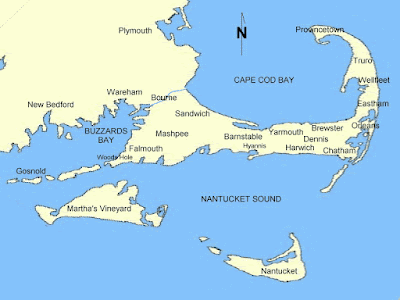
Across the water, almost due south of our former home, is Nantucket Island, made famous by Herman Melville’s brilliant 1851 novel, Moby Dick. Today, however, Nantucket is perhaps better known as the home of our younger son, Brendan, an electrician who helps the elites keep their lights on and power their Internet connections with their brokers. Nantucket is also the home — okay, one of the homes — of many so-called celebrities. For example, John Kerry, our nation’s climate czar, has a rather large home on Nantucket which he visits seasonally in his private jet. I can’t say for sure, but considering how much time he spends jetting around the world to ensure the peasants freeze in the winter and suffer heatstroke in the summer, I assume he must own the world’s only electric airplane. After all, if he owned a real jet that consumed thousands of gallons of jet fuel and polluted our upper atmosphere…well, that would be sheer hypocrisy. But as it turns out, Kerry is no stranger to hypocrisy, a trait he demonstrated years before when he “served” on swift boats in Vietnam, shopped for medals, and then publicly denigrated has fellow veterans. If you want the truth about Kerry’s Vietnam service, read John O’Neill’s book, Unfit for Command. O’Neill, a true hero and my Naval Academy classmate, lifts the veil behind which Kerry tried to hide that truth. Today, though, Czar Kerry is a beloved Nantucket resident, a kind of town character who loves to ask the tourists such questions as, “Do you know who I am?” as he exercises head-of-the-line privileges at the local coffee shop. Always generates lots of laughs.
This NIMBY attitude was clearly manifested this week when Florida’s Governor Ron DeSantis flew 50 Venezuelan migrants to Martha’s Vineyard. Unlike President Biden, who has flown tens of thousands of migrants to destinations all over the country and has consistently done so under the cover of darkness, DeSantis and the other Republican border state governors hide nothing and fly or bus migrants openly. The reaction from liberals? DeSantis must be a Nazi and Biden is obviously a saint. Oh, yes, the city of El Paso, Texas, run by Democrat politicians, is also busing migrants to New York, but about this we hear nothing but silence from the northern Democrats. Go figure!
"Florida Gov. DeSantis sending asylum-seekers to Martha's Vineyard is like 'me taking my trash out and just driving to different areas where I live and just throwing my trash there," a founding member of a foundation that helps refugees says."
Oh, yes, those trashy migrants certainly don't belong on Martha's Vineyard. As you might expect, the backlash was significant, and NBC deleted the tweet.
Tuesday, September 13, 2022
Life and Death
Life and death, beginnings and endings -- every ending, every death, brings a new beginning, new life. How did Jesus put it?
“Truly, truly, I say to you, unless a grain of wheat falls into the earth and dies, it remains alone; but if it dies, it bears much fruit. He who loves his life loses it, and he who hates his life in this world will keep it for eternal life” [Jn 12:24-25].
"Greater love has no man than this, that a man lay down his life for his friends” [Jn 15:13].